
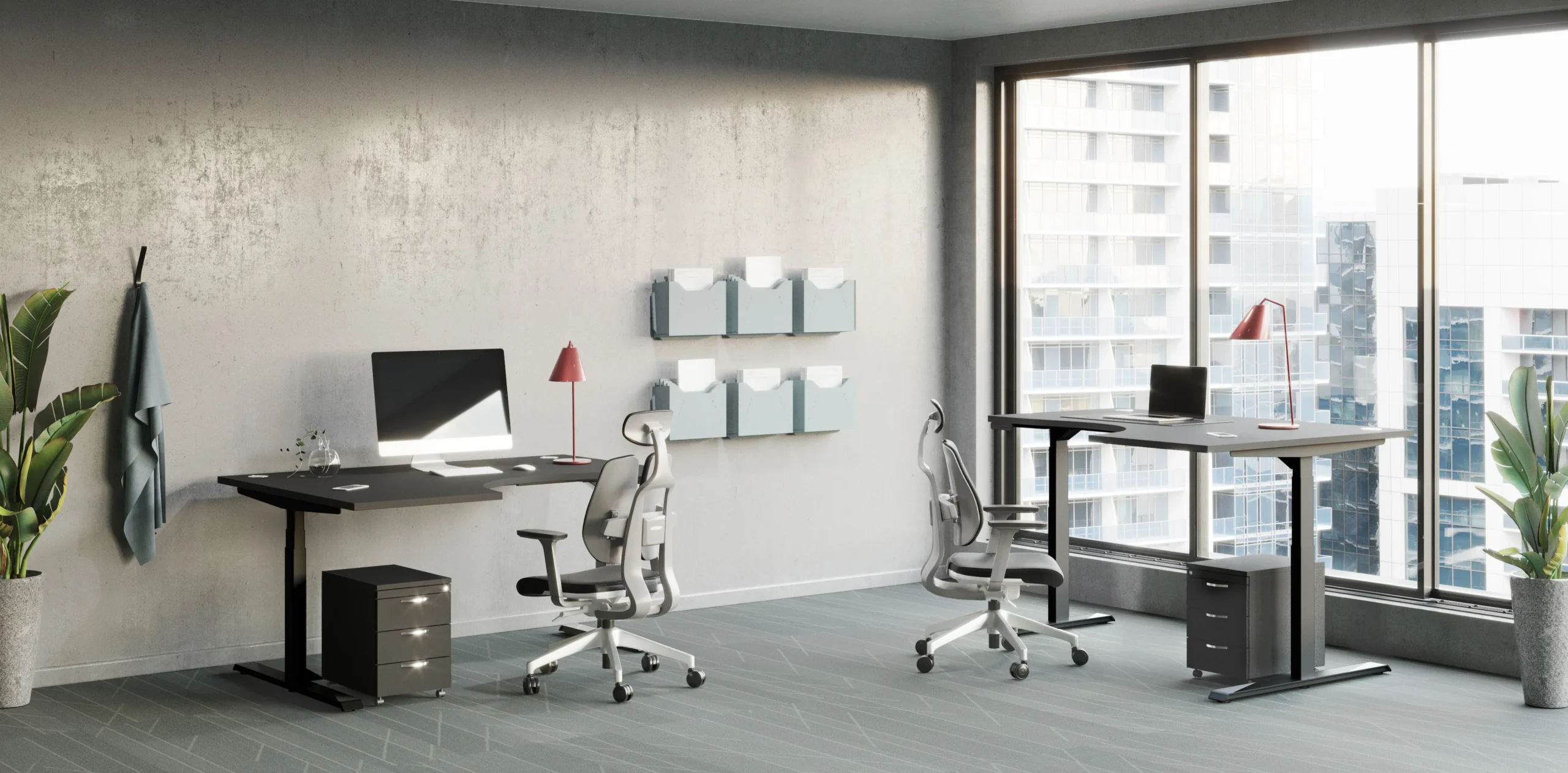
The 3 4 5 rule is a simple but effective office interior design principle used to create balance, rhythm, and visual interest within a space. Rather than relying on strict measurements or complex formulas, the 3 4 5 rule focuses on how items are grouped and arranged so interiors feel intentional rather than accidental.
In interior design and office fitouts, particularly in workplaces and commercial environments, this rule helps designers make decisions about furniture layouts, accessories, colours, and even architectural features. When used well, the 3 4 5 rule can make a space feel calmer, better organised, and easier to navigate without the user ever knowing why.
This article explains exactly what the 3 4 5 rule is, how it works in real interiors, and how it is applied in professional office design projects.
Key takeaways
- The 3 4 5 rule is a visual grouping principle, not a measurement system
- It helps spaces feel balanced without appearing rigid or overdesigned
- Groups of 3, 4, and 5 items serve different visual purposes
- The rule works particularly well in office and commercial interiors
- Designers use it as a guide, not a rulebook

What exactly is the 3 4 5 rule in office interior design?
A simple explanation of the 3 4 5 rule
At its core, the 3 4 5 rule refers to grouping design elements in sets of 3, 4, or 5 to create visual harmony in your office. Each number plays a different role in how a space feels. Groups of 3 tend to feel dynamic and natural. Groups of 4 bring structure and balance. Groups of 5 introduce complexity and visual depth.
Rather than placing items randomly or symmetrically, designers use this rule to avoid spaces feeling flat or overly staged. It is particularly useful when styling office furniture groupings, arranging accessories, or selecting colour palettes.
The rule does not mean every space must include all 3 numbers at once. Instead, it encourages designers to think consciously about how many elements appear together and what emotional response that grouping creates.

Where the rule comes from and why designers use it
The 3 4 5 rule has roots in visual psychology and art theory. Human eyes naturally seek patterns, but they also enjoy variation. Too much symmetry can feel dull, while too much randomness feels chaotic. Groupings of 3, 4, or 5 sit comfortably between those extremes.
Office interior designers use the rule because it offers structure without being restrictive. It allows creative freedom while still guiding decision making. In commercial interiors, where multiple functional needs must coexist, having a principle like this helps maintain cohesion across large or complex spaces.
How the 3 4 5 rule works in practice
Understanding the role of groups of 3
Groups of 3 are often described as the most visually pleasing. They introduce movement and asymmetry without creating imbalance. In interior design, this might look like 3 pendant lights above a counter, 3 chairs arranged around a table, or 3 complementary colours used within a scheme.
In office interiors, groups of 3 can soften otherwise structured environments. For example, 3 breakout seating elements can feel more relaxed than a rigid row of identical furniture. The slight variation encourages interaction while maintaining order.
Designers often use groups of 3 in focal areas where they want the eye to pause and engage.
How groups of 4 create balance
Groups of 4 are more structured and symmetrical. They work well in spaces that require clarity, organisation, and function. In meeting rooms or workstations, groups of 4 office desks or office chairs feel logical and purposeful.
In office interior layouts, groups of 4 help anchor a space. They are often used for storage units, lighting grids, or repeated architectural features. This grouping brings a sense of stability and professionalism, which is especially important in corporate environments.
When balanced carefully with softer groupings elsewhere, groups of 4 prevent a space from feeling too playful or informal.
Why groups of 5 add visual interest
Groups of 5 introduce complexity and richness. They allow for variation in height, shape, or texture while still feeling cohesive. Office designers might use 5 materials within a palette, 5 decorative elements on a wall, or 5 planters arranged across a space.
In larger interiors, such as reception areas or collaborative zones, groups of 5 help spaces feel layered and considered. They create depth without overwhelming the user.
This grouping is particularly effective in feature areas where visual interest is encouraged but control is still needed.
Why the 3 4 5 rule matters in interior design
Creating balance without overthinking design
One of the biggest advantages of the 3 4 5 rule is how intuitive it becomes once understood. Designers do not need to measure every detail or justify every choice. The rule provides a framework that supports confident decision making.
This is especially valuable in office interiors where timeframes, budgets, and stakeholder input can complicate design decisions. The rule allows designers to explain choices clearly and avoid subjective debates about what feels right.
For clients, the result is a space that feels balanced and professional without appearing overdesigned.
Helping spaces feel intentional rather than cluttered
Spaces that ignore grouping principles often feel cluttered or unfinished. Items appear scattered rather than curated. The 3 4 5 rule helps prevent this by encouraging deliberate placement.
By thinking in groups, designers ensure that every element has a purpose. This is critical in workplaces where visual noise can affect concentration and employee wellbeing in the office.
The rule supports clean, organised interiors that still feel warm and human.
Using the 3 4 5 rule in different types of spaces
Applying the 3 4 5 rule in office interiors
Office environments benefit greatly from the 3 4 5 rule because they must balance function with comfort. Designers often use groups of 3 in informal zones such as breakout areas or touchdown spaces. These groupings encourage collaboration and conversation.
Groups of 4 are more common in task focused areas such as desks, meeting rooms, and storage systems. They reinforce structure and efficiency.
Groups of 5 tend to appear in shared or feature areas, such as reception spaces or collaborative hubs, where visual interest is important.
Projects delivered by teams such as iGate Interiors often rely on principles like this to ensure consistency across large office fitouts while allowing each area to serve its own purpose
Using the rule in open plan layouts
Open plan offices can feel overwhelming if not carefully structured. The 3 4 5 rule helps break large spaces into digestible zones without the need for physical barriers.
For example, seating clusters might be arranged in groups of 3 or 5 to define informal meeting areas. Lighting can be grouped in sets of 4 to establish work zones. Accessories and finishes can follow similar grouping logic to maintain visual flow.
This approach improves navigation and makes large spaces feel more human in scale.
How the rule works in smaller spaces
Smaller offices or compact rooms benefit from restraint. Groups of 3 are often the most effective here, as they avoid overcrowding while still providing interest.
Designers might use 3 key materials, 3 lighting elements, or 3 furniture pieces to define the space. This keeps the design focused and prevents visual clutter.
In tight spaces, the rule becomes less about variety and more about discipline.
Examples of the 3 4 5 rule in interior design
Furniture groupings and layouts
Furniture layouts are one of the clearest applications of the 3 4 5 rule. A seating area might include 3 chairs around a table, or a collaborative zone might feature 5 soft seating elements arranged at varying angles.
In office environments, desk clusters often follow groups of 4 for efficiency, while informal seating follows groups of 3 for comfort. The contrast between these groupings helps users intuitively understand how each area should be used.
Thoughtful grouping also improves circulation and sightlines throughout the space.
Colour palettes and material choices
The rule is not limited to physical objects. Designers often apply it when selecting colours and materials. A palette might include 3 primary colours, supported by 4 textures, with 5 accent finishes layered throughout.
This approach prevents colour schemes from feeling flat or overly busy. It also allows designers to introduce personality while maintaining control.
In commercial interiors, this is particularly important for brand alignment and longevity.
Accessories, artwork, and styling details
Accessories are where the 3 4 5 rule truly shines. Wall art arranged in groups of 3 feels natural and engaging. Shelving styled with 5 varied objects creates depth and interest.
In workplaces, accessories must be carefully balanced to avoid distraction. Grouping helps ensure decorative elements enhance the space rather than compete with it.
This principle also makes future updates easier, as items can be swapped without disrupting the overall balance.
When to bend or break the 3 4 5 rule
Situations where strict rules do not work
No design rule should be applied blindly. Some spaces demand symmetry or repetition beyond the 3 4 5 framework. Large boardrooms, training rooms, or highly regulated environments may require more uniform layouts.
In these cases, functionality takes priority over visual rhythm. Designers may still use the rule subtly, but it will not drive every decision.
Understanding when to step away from the rule is as important as knowing how to use it.
Trusting experience, space, and function
Experienced designers treat the 3 4 5 rule as a guide rather than a law. They read the space, understand how it will be used, and adapt accordingly.
Professional judgement allows the rule to be applied flexibly, ensuring the final design serves both people and purpose.
This balance is what separates thoughtful design from formulaic office interiors.
How professional designers use the 3 4 5 rule
Combining the rule with space planning principles
The 3 4 5 rule works best when paired with strong space planning. Designers consider circulation, zoning, and user behaviour alongside visual grouping.
For example, desk layouts may follow groups of 4 for efficiency, while adjacent breakout areas use groups of 3 to signal a shift in behaviour. This layered approach improves usability and clarity.
Services such as our commercial office fit out often incorporate these principles from the earliest planning stages.
Using the rule alongside lighting and acoustics
Lighting design benefits greatly from the 3 4 5 rule. Pendant lights grouped in 3 create focal points, while grids of 4 provide even task lighting. Feature lighting often appears in groups of 5 to add drama.
Acoustic elements can follow similar logic, with panels or baffles arranged in controlled groupings to balance performance and aesthetics
By aligning visual and technical elements, designers create cohesive environments that perform well and look considered.
Frequently asked questions about the 3 4 5 rule
Is the 3 4 5 rule a strict rule or a guideline?
The 3 4 5 rule is a guideline rather than a strict rule. It provides structure and direction but should always be adapted to suit the space and its purpose.
Does the 3 4 5 rule apply to colour as well as furniture?
Yes, the rule is often used when selecting colours, materials, and finishes. Grouping colours thoughtfully helps create depth and balance without overwhelming the space.
Can the 3 4 5 rule work in modern office design?
Absolutely. Modern office design relies heavily on principles like this to balance flexibility, wellbeing, and visual clarity. The rule supports both creative and professional environments when applied thoughtfully.