
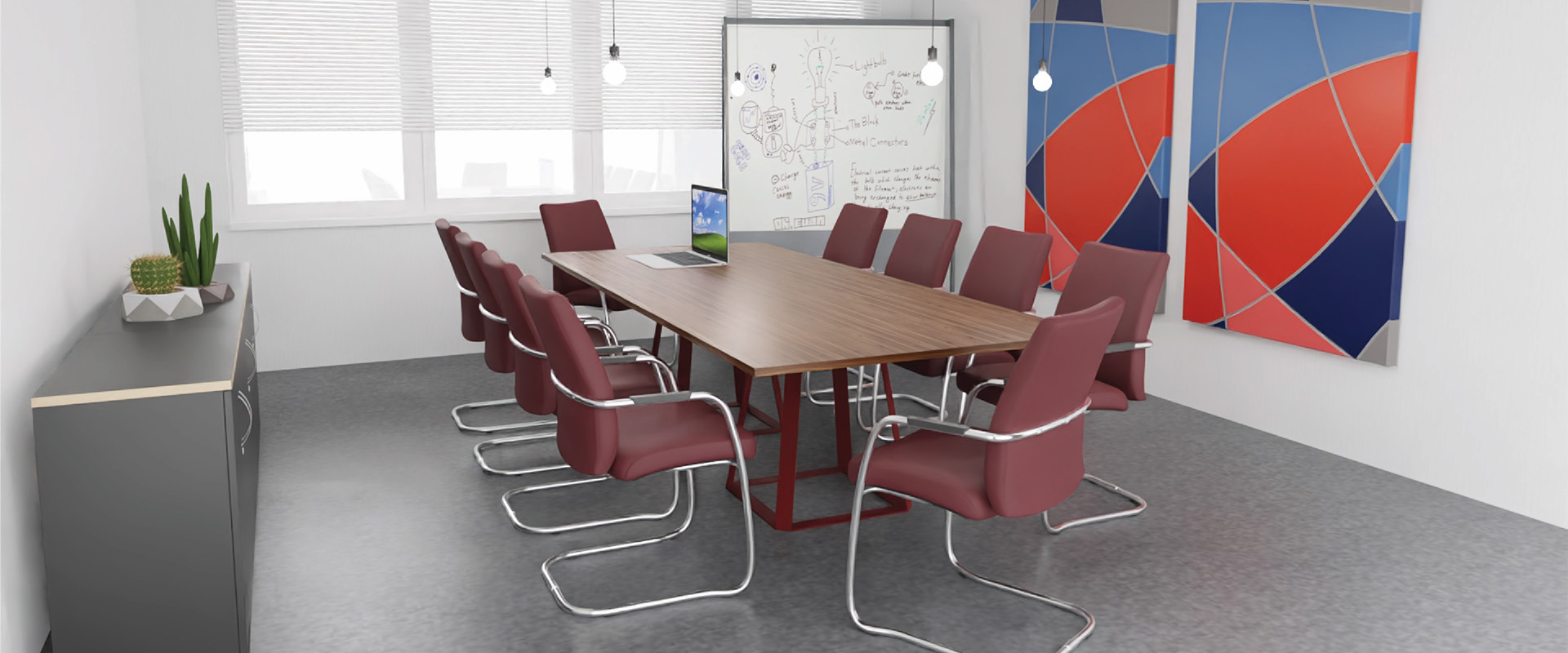
A collaborative workspace is no longer a nice extra in a modern office. For many businesses, it is the difference between a workplace people use out of habit and one they actively want to come into. When designed well, a collaborative workspace helps teams share ideas, solve problems, build relationships and get work done without feeling boxed in by a traditional layout.
The important part is balance. Collaboration does not mean removing every wall, adding a few sofas and hoping for the best. People still need quiet spaces, meeting areas, privacy and somewhere to take a proper call without feeling like they are performing to the whole office.
Good collaborative workspace design brings people together in a way that feels natural. It supports planned meetings, quick conversations, hybrid calls, creative thinking and the quieter work that usually happens in between.
Key takeaways
- A collaborative workspace should support teamwork without making the office noisy or distracting.
- The best designs include a mix of open areas, meeting rooms, quiet spaces and informal breakout points.
- Collaborative workspace design should be based on how people actually work, not just what looks good online.
- Flexibility matters because teams, technology and working habits change over time.
- Acoustics, furniture, lighting and layout all affect how well collaboration works.
The office should give people a reason to come in, especially in a hybrid working world.

As part of FBD’s comprehensive refurbishment, iGate Interiors installed numerous collaborate workspaces within their open plan office.
What is a collaborative workspace?
A collaborative workspace is an office area designed to help people work together more easily. That might sound simple, but it can take many different forms depending on the business.
For one company, it might mean a flexible project area where teams can gather around a large table and review plans. For another, it could mean a set of smaller meeting booths for quick conversations and video calls. In a larger office, it may include breakout areas, open team zones, quiet rooms, social spaces and formal meeting rooms all working together.
The goal is not to create one type of space and expect it to solve every problem. A strong collaborative workspace gives people choice.

iGate Interiors created this collaborative workspace including modular seating and a presentation screen for Presidio as part of their office fit out project.
More than an open plan office
Open plan offices are often linked with collaboration, but they are not the same thing.
An open plan layout can help people feel more connected. It can make teams more visible and reduce the sense of people being hidden away in separate rooms. Used well, this can support faster communication and a more sociable workplace.
Used badly, it can also become a giant noise machine with desks in it.
A collaborative workspace should be more considered. It may include open areas, but it should also include places for private conversations, focused tasks and smaller group work. The difference is in the planning. Open plan is a layout. Collaborative workspace design is about how people use the office.
Designed around different types of teamwork
Not all collaboration looks the same. A 5 minute chat beside a desk is very different from a client presentation or a 2 hour planning session.
A good office should support different types of teamwork, including:
- Quick catch ups
- Formal meetings
- Creative workshops
- Project planning
- Video calls
- Training sessions
- Informal conversations
- Social moments between teams
This is where many offices fall short. They create 1 or 2 meeting rooms and expect everything to happen there. Before long, the rooms are booked all day, people are taking calls in awkward corners and simple conversations start disturbing everyone nearby.
A better approach is to design a variety of spaces, each with a clear purpose.
Why collaborative workspace design matters
The way an office is designed has a real effect on how people behave. If collaboration is awkward, noisy or uncomfortable, people will avoid it. If the space makes teamwork easy, people are more likely to share ideas and communicate properly.
That does not mean every office needs to look like a creative agency with beanbags, bright walls and a table tennis table that nobody has used since 2018. It means the office should support the work people are actually there to do.
The office has to earn the commute
Hybrid working has changed how people think about the office. When staff are travelling in, the space needs to offer something that is harder to get at home.
For many businesses, that thing is collaboration.
People may be able to answer emails, write reports or handle admin from home. What they often miss is the ability to sit with colleagues, talk through an idea, learn from others and feel part of a team. A well designed collaborative workspace gives the office a clearer purpose.
This is especially important for newer staff, hybrid workers and teams that do not see each other every day. The office becomes a place for connection, not just a place with desks.
Better communication between teams
A poor layout can create silos without anyone meaning it to. Teams may sit in separate corners, meeting rooms may feel closed off and informal conversations may happen only between people who already work closely together.
A collaborative workspace can help break that pattern. Shared spaces, visible meeting points and relaxed breakout areas can make it easier for people to talk across departments.
This does not mean forcing everyone into constant interaction. Most people do not want to collaborate every second of the day. They do, however, benefit from spaces that make communication easier when it needs to happen.
Poor collaboration spaces cause frustration
A badly planned collaborative workspace can create more problems than it solves.
If there are not enough meeting rooms, people start holding meetings at their desks. If there are no quiet spaces, confidential calls become difficult. If breakout areas are too close to focused work zones, the noise can irritate everyone nearby.
Common signs of poor collaboration planning include:
- Meeting rooms booked all day for short calls
- People taking video calls in corridors
- Breakout areas being used as overflow workstations
- Staff avoiding certain areas because they are too noisy
- Teams struggling to find somewhere suitable for quick discussions
These are not just minor annoyances. They affect productivity, concentration and the general mood of the office. Collaborative workspace design should remove friction, not add more of it.
Key features of a good collaborative workspace
A good collaborative workspace is usually made up of several connected areas. Each one has a role to play.
The best offices do not rely on one big idea. They combine open space, private rooms, flexible furniture, technology and comfort in a way that suits the business.
Open areas with purpose
Open areas can be useful for collaboration when they are planned carefully.
They work well for team visibility, casual conversation and shared energy. They can help people feel connected and make the office feel more active. This is especially useful in businesses where teams need regular contact throughout the day.
The key is to avoid turning every inch of the office into open space. There should be a reason for each area. Some open areas may be designed for shared work. Others may support informal chats or movement through the office.
Open areas also need support from the rest of the layout. If there are no meeting rooms, quiet zones or acoustic treatments, the open space will quickly become frustrating.
Dedicated meeting spaces
Formal meeting rooms still matter.
A collaborative workspace needs places where teams can sit down properly, talk without interruption and use the right technology. These rooms are important for client meetings, presentations, planning sessions, interviews and private discussions.
The size of meeting spaces should reflect actual use. Not every meeting needs a large boardroom. Many offices benefit from a mix of room sizes, including smaller spaces for 2 to 4 people.
Meeting rooms should also be easy to use. Good office lighting, suitable seating, screens, power access and video call facilities all help. If a room takes 10 minutes to set up before every meeting, it is already working against the team.
Meeting booths and smaller rooms
Meeting booths are useful because they fill the gap between a desk and a formal meeting room.
They can support quick conversations, 1 to 1 discussions, focused calls and short video meetings. In a busy office, this can take pressure off larger meeting rooms and reduce disruption in open areas.
Smaller spaces also give people more choice. Not every conversation needs a full meeting room, but many conversations still need some privacy. Meeting booths are a practical part of collaborative workspace design because they help collaboration happen without taking over the whole office.
Breakout and social spaces
Breakout spaces are often where informal collaboration happens. People chat over coffee, discuss small issues away from their desks and build relationships that support better teamwork.
A good breakout area should feel comfortable, but still purposeful. It needs suitable seating, enough table space and a location that makes sense. If it is too hidden away, people may not use it. If it is too close to focused workstations, it may become a distraction.
Breakout areas can also support wellbeing. A change of scene during the day can help people reset and return to work with more focus. The best breakout spaces feel relaxed without becoming disconnected from the rest of the office.
Project and workshop zones
Project areas are useful for teams that need to spread out, review materials or work through ideas together.
These spaces might include larger tables, writable walls, display screens, pin boards or flexible seating. They are particularly useful for planning sessions, design reviews, team workshops and problem solving.
Unlike a formal meeting room, a project zone can feel more active and hands on. It gives people permission to move around, point at things, make notes and work through ideas visually.
This kind of collaborative workspace can be especially valuable for businesses that handle complex projects or need regular cross team input.
Designing for flexibility
Workplaces change. Teams grow, departments move, hybrid policies shift and technology keeps evolving. A collaborative workspace should be able to respond without needing a full redesign every time something changes.
Flexibility is not about making everything temporary. It is about giving the office room to adapt.
Modular furniture
Modular furniture can help a space serve more than one purpose.
Moveable tables, mobile screens, stackable chairs and reconfigurable seating allow teams to change the room around depending on the task. A space might be used for a workshop in the morning, a team briefing after lunch and a small event later in the week.
This works especially well in small offices where space is limited. Rather than creating separate rooms for every possible activity, flexible furniture helps the same area work harder.
Multi use spaces
A collaborative workspace can often double up.
A breakout area might also support informal meetings. A training space might become a project area when not in use. A large meeting room might open into a social space for company updates or team events.
The trick is to plan these uses from the beginning. Multi use spaces need the right furniture, storage, power access and layout. Without that planning, they can become awkward spaces that are technically flexible but practically annoying.
Planning for growth and change
No office stays perfect forever. Teams expand, working patterns change and the business may need different things in 12 months.
Collaborative workspace design should allow for that. This might mean choosing furniture that can be added to later, keeping some areas open to change or designing meeting spaces that can support different technology setups.
A good office fit out should solve today’s problems while leaving room for tomorrow’s needs.
Balancing collaboration and concentration
Collaboration is valuable, but concentration still matters. In fact, one of the biggest mistakes in collaborative workspace design is acting as if teamwork is the only thing people do.
Most roles involve a mix of activities. People need to talk, listen, plan, write, think, call, present and focus. The office should support that full range.
Why too much openness can backfire
Too much open space can make it harder for people to concentrate. Even small conversations can become distracting when there is nowhere else for them to happen.
This is where some collaborative workspaces go wrong. They encourage interaction but forget that people also need a break from it. The result can be a workplace that feels lively at first but tiring over time.
A better approach is to design collaboration into the office without letting it dominate every area. Open spaces should be balanced with rooms, booths and quieter zones.
Acoustic planning
Sound control is a major part of collaborative workspace design.
Acoustic panels, meeting booths, soft furnishings, carpets, curtains, screens and layout choices can all help manage noise. The aim is not to make the office silent. The aim is to stop sound travelling where it should not.
Acoustics should be considered early rather than added as a fix later. If a breakout area is placed beside a quiet work zone, acoustic products can help, but the layout itself may still cause problems.
Good acoustic planning makes collaboration more comfortable for everyone. People can talk where they need to talk, while others can still focus nearby.
Quiet zones and focus spaces
A collaborative workspace needs places where people can step away from the activity.
Quiet zones do not need to feel cold or isolated. They can be calm, comfortable areas for focused work, reading, writing or detailed tasks. Some offices may also need private rooms for confidential work or sensitive conversations.
This balance helps avoid resentment. People are usually more open to collaborative areas when they know they also have somewhere quieter to go when needed.
Common collaborative workspace mistakes
Even well intentioned office designs can miss the mark. Many mistakes come from focusing on how the space looks rather than how it will work.
A stylish office is great, but only if people can use it properly.
Common mistakes include:
- Making everything open: Open areas can support collaboration, but too much openness can create noise, distraction and a lack of privacy.
- Forgetting about acoustics: Sound control should be considered early, especially when breakout areas, meeting zones and open workstations sit close together.
- Choosing furniture before planning the layout: Furniture should support the purpose of the space, not dictate it.
- Copying trends without understanding the team: What works for 1 business may not suit another. A collaborative workspace should be shaped around real working habits.
- Making every space too casual: Some collaboration needs structure, privacy and proper tools, not just a sofa and a coffee table.
- Ignoring storage: Meeting rooms, project spaces and breakout areas can quickly become cluttered without somewhere to keep equipment and supplies.
The best way to avoid these mistakes is to start with the needs of the business. A collaborative workspace should look good, but it also needs to work hard every day.
How to plan a collaborative workspace for your office
Planning a collaborative workspace is about creating the right mix of spaces for your business. It does not have to mean a huge office transformation. Sometimes small, well planned changes can make a major difference.
The starting point should always be the same: understand the people, the work and the problems the current office is creating.
Review your current layout
Look at how the office is being used now.
Which areas are busy? Which are avoided? Are meeting rooms overloaded? Are people holding conversations at desks because there is nowhere else to go? Are quiet tasks being interrupted by nearby activity?
This review helps identify what the new collaborative workspace needs to solve.
Map the types of collaboration your team needs
Different businesses need different types of collaborative workspace.
A sales team might need quick access to small rooms for calls. A design or project team may need large tables, screens and pin up space. A leadership team may need private rooms for sensitive conversations. A growing business may need flexible areas that can switch between training, meetings and social use.
It helps to list the situations your office needs to support. For example:
- How often do people work in groups?
- Are most meetings internal or client facing?
- Do teams need spaces for video calls?
- Are there regular training sessions?
- Do people need project spaces they can return to?
- Are informal conversations happening in the wrong places?
- Which areas are currently underused?
This gives the office design process a practical starting point. The layout can then be built around real needs rather than guesswork.
Use visual planning before committing
Visual planning can make the design process much easier. 2D layouts, 3D visuals and VR previews help teams understand how the space will look and feel before work begins.
This is where working with an experienced office interiors team can be useful. iGate Interiors, for example, supports businesses with space planning, design, furniture sourcing and full project delivery, which helps connect the idea of a collaborative workspace with the practical details needed to deliver it.
FAQs
What is a collaborative workspace?
A collaborative workspace is an office area designed to help people work together. It may include open team areas, meeting rooms, breakout spaces, project zones, booths and shared technology. The aim is to make teamwork easier while still supporting focus and privacy.
What should a collaborative workspace include?
A collaborative workspace should include a mix of spaces for different tasks. This often means meeting rooms, informal seating, quiet zones, acoustic treatments, flexible furniture, screens, power access and comfortable breakout areas.
Is a collaborative workspace the same as an open plan office?
No. An open plan office is a type of layout, while a collaborative workspace is designed around how people work together. It may include open areas, but it should also include private rooms, quiet spaces and places for focused conversations.
How do you make a collaborative workspace less noisy?
Noise can be reduced with acoustic panels, meeting booths, soft furnishings, carpets, screens and careful zoning. It also helps to separate louder social spaces from quiet work areas.
Can a small office have a collaborative workspace?
Yes. A small office can still have a collaborative workspace by using flexible furniture, compact meeting areas, shared tables, small booths and multi use breakout spaces. The key is to make every area work hard.
How does collaborative workspace design support hybrid working?
Collaborative workspace design supports hybrid working by making the office valuable for the tasks people do best together. This includes team meetings, planning sessions, mentoring, social interaction and creative work. Good technology also helps remote staff join in properly.
What is the difference between a breakout space and a collaborative workspace?
A breakout space is usually an informal area for relaxing, eating or casual conversations. A collaborative workspace is broader. It can include breakout spaces, but it may also include meeting rooms, project areas, open team zones and quiet rooms.
How do you start planning a collaborative workspace?
Start by reviewing how your current office is used. Look at meeting habits, noise issues, underused areas and staff feedback. From there, you can plan a balanced mix of spaces that support teamwork, focus and flexibility.

This meeting room was modernised by iGate Interiors for the Courts Service of Ireland in Smithfield, Dublin, to create a bespoke, professional collaborative space within their office.