
Small office interior design is all about making careful choices. When space is limited, every desk, chair, storage unit, walkway and meeting area has to earn its place. A small office can feel sharp, comfortable and professional, but it needs more thought than simply fitting as much furniture into the room as possible.
Good small office design helps people move around easily, work comfortably and feel positive about the space they use each day. It should also reflect the business itself. A compact office does not need to feel temporary, cramped or plain. With the right layout, furniture, lighting and storage, it can become a workspace that feels much bigger than it really is.
Key Takeaways
- Small office interior design should always begin with how the space needs to work day to day.
- A clear layout can make a compact office feel larger, calmer and easier to use.
- Flexible furniture, smart storage and good lighting help smaller spaces work harder.
- Small office design should support focused work, informal conversations and practical movement.
- A smaller workspace can still look polished, professional and full of personality.
- Avoid trying to fill every available corner, as this often makes the office feel smaller.

An example of a meeting booth installed by iGate Interiors. Office pods like this can be used in small office interiors to create private spaces where room is limited.
Start With How the Office Needs to Work
Before choosing colours, desks or finishes, it is worth taking a step back and looking at the actual purpose of the space. This is where many small office interior design projects either succeed or struggle. A small office has less room for guesswork, so the early planning stage matters.
A larger workplace may have enough space to absorb a few inefficient decisions. A small office rarely has that luxury. If the printer is in the wrong place, if storage blocks a walkway, or if desks are positioned awkwardly, people will feel it every day.

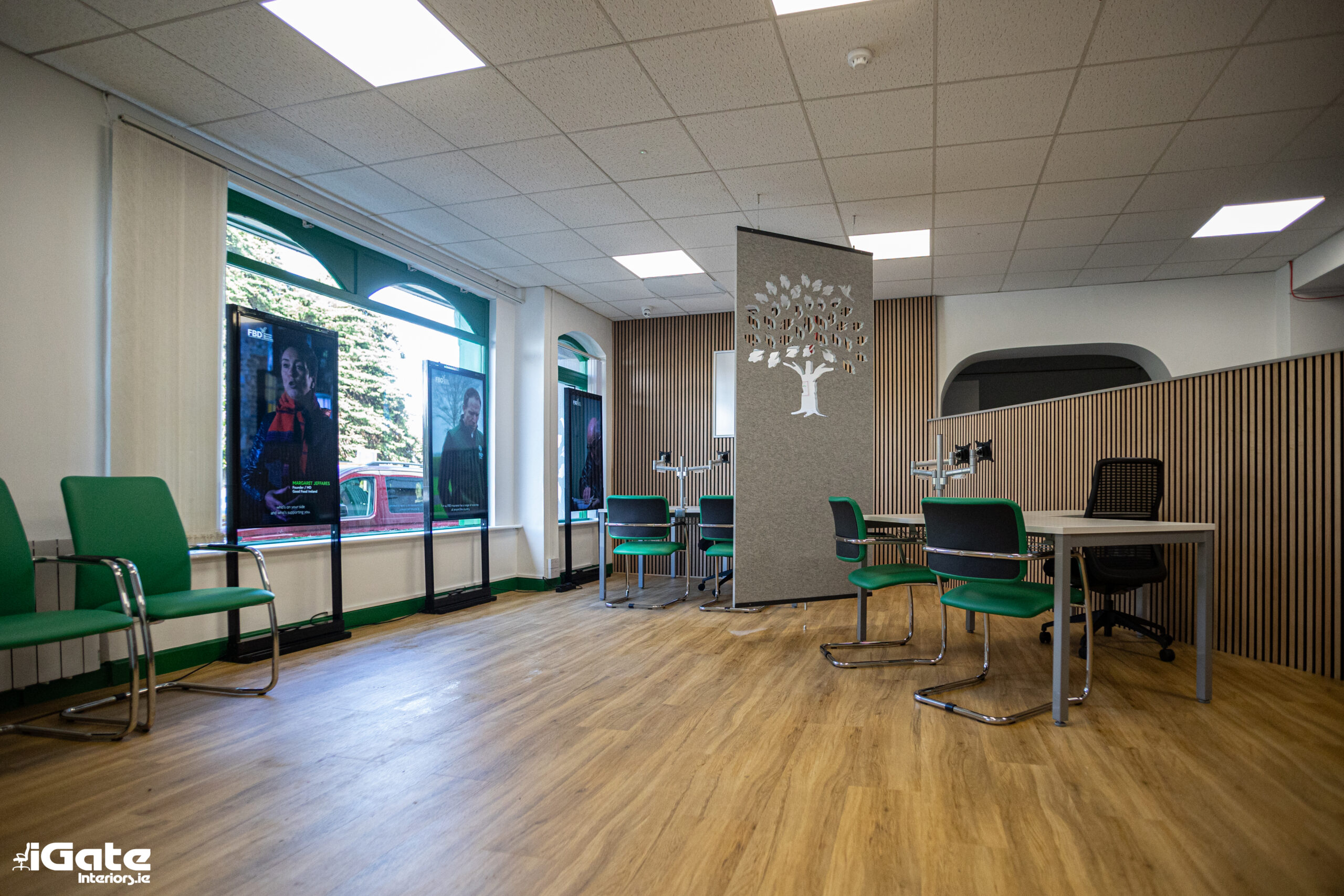
iGate Interiors utilised dividiers and partitions to create a unique and interesting small office space for FBD Wicklow
Understand the daily flow of the space
Think about how people arrive, move, sit, meet, print, store items and leave. These small actions shape the success of the layout. A good small office interior design plan should make these daily movements feel natural.
For example, if people regularly need access to shared files, samples or equipment, these items should not be tucked behind someone’s chair. If clients visit, the entrance area should feel clear and welcoming rather than like a storage overflow zone. If staff take regular calls, it helps to understand whether they need quiet corners, booths or better acoustic control.
Flow is not only about movement. It is also about reducing little points of friction. A narrow walkway, a badly placed chair or a meeting table that blocks access to storage can all make a small office feel more frustrating than it needs to be.
Plan around people before furniture
It is tempting to begin with the question, “How many desks can we fit in?” That question matters, but it should not come first. Small office design works best when it starts with people.
How many people use the office daily? Do they all need fixed desks? Are there hybrid workers? Does the team need quiet focus time, or is the work more collaborative? Does the office need to impress clients, or is it mainly an internal workspace?
Once those questions are clear, the furniture plan becomes much easier. The aim is not to squeeze people into the smallest possible footprint. The aim is to create a workspace where people can work properly without feeling boxed in.
This is also where professional space planning can be useful. An office interiors specialist can help map out the best use of space before any major decisions are made, especially where a small office needs to support several different functions.
Choose a Layout That Makes the Space Feel Bigger
Layout has a huge impact on how a small office feels. The same room can feel open and calm or tight and awkward depending on how it is arranged. Small office interior design often comes down to creating the feeling of space, even when the square footage is fixed.
The best layouts tend to be simple, logical and easy to understand. People should be able to walk in and immediately sense where to go.
Keep walkways clear and simple
Clear walkways make a small office feel more generous. If people have to turn sideways to pass each other, move chairs out of the way, or squeeze around storage units, the space will quickly feel cramped.
A good walkway does not need to be huge, but it does need to be obvious. Main routes should connect the entrance, workstations, meeting areas, storage and shared facilities without too many obstacles.
This is one of the most practical parts of small office interior design. It may not sound exciting, but it makes a big difference. Nobody walks into an office and says, “What a beautiful circulation route.” They do notice when the office feels awkward though.
Use zones instead of walls where possible
Small offices often need more than one type of space. There may be a need for focused work, informal meetings, storage, office printing, calls and client conversations. The challenge is to create these zones without chopping the office into tiny rooms.
Furniture can help define areas without closing them off. A soft seating area can create a casual meeting zone. A change in flooring can mark out a breakout point. Acoustic panels can reduce noise while adding visual interest. Low storage can act as a divider without blocking light.
This kind of zoning is especially useful in small office design because it gives structure without making the room feel smaller. Full height partitions can work in some cases, but they should be used carefully. Too many solid barriers can make a compact office feel like a maze.
Avoid filling every spare corner
Empty space is not wasted space. In a small office, it is part of the design.
Leaving breathing room around desks, seating and storage helps the office feel calmer. It also gives people more freedom to move. When every corner is filled, the room can start to feel busy before anyone has even switched on a laptop.
This does not mean leaving large areas unused. It means being selective. A small office interior design scheme should prioritise what the team actually needs, rather than adding furniture simply because it fits on the floor plan.
Pick Furniture That Works Harder
Furniture can make or break a small office. Oversized desks, bulky chairs and heavy storage can quickly dominate the space. The right pieces can do the opposite. They can make the office feel lighter, neater and easier to use.
Small office interior design usually benefits from furniture that is practical, well proportioned and flexible. It should look good, but it also needs to perform.
Use compact desks without compromising comfort
Compact does not mean uncomfortable. A desk can be smaller without feeling mean or impractical. The key is to choose the right size for the type of work being done.
For laptop based teams, smaller desks may work perfectly well, especially if there is good cable management and nearby storage. For staff using multiple screens, larger work surfaces may still be needed. The mistake is assuming every person needs the same setup.
Desk depth, chair movement and legroom all need to be considered. A desk that looks neat on a plan may not work if the chair pushes too far into a walkway. Small office interior design is full of these little details, and they matter.
Consider flexible and multi purpose furniture
Flexible furniture is ideal for smaller workplaces. A meeting table that doubles as a project space, mobile storage that can be moved when needed, or modular seating that can be reconfigured can all help the office adapt.
This is particularly useful for growing businesses. A small office may need to support different activities at different times of day. One area might be used for a team catch up in the morning, focused work during the day and client discussions in the afternoon.
Multi purpose office furniture keeps the space useful without adding too many separate pieces. It also helps avoid the classic small office problem of having a meeting table that sits unused for most of the week while taking up half the room.
Think vertically with storage
When floor space is limited, vertical space becomes valuable. Tall cabinets, wall shelving and higher level storage can help reduce clutter without spreading everything across the office.
The trick is to use vertical storage carefully. Too much tall furniture can make a room feel enclosed, especially if it blocks light or views across the space. A balanced approach works best. Use height where it makes sense, but keep key sightlines open.
Wall mounted storage can also be useful in smaller offices. It frees up floor space and keeps essential items accessible. For a cleaner look, closed storage is often better than open shelves, particularly in client facing spaces.
Make Light, Colour and Materials Do More
Light, colour and materials play a major role in small office interior design. They affect how spacious the office feels, how comfortable it is to work in and how professional the office space appears.
This is where a small office can really start to feel considered. Even a simple layout can be lifted by the right office lighting, a balanced colour palette and materials that add warmth without clutter.
Use lighting to open up the room
Natural light is one of the best assets in a small office. If the space has windows, avoid blocking them with tall furniture or heavy partitions. Let the light travel as far into the office as possible.
Artificial lighting also needs thought. A single harsh overhead light can make a small office feel flat and tired. Layered lighting works better. This may include ceiling lights, task lighting at desks, softer lighting in breakout areas and feature lighting where appropriate.
Good lighting can make the office feel brighter and more spacious. It also supports comfort, especially for teams working at screens for long periods. Dark corners and gloomy meeting areas can make even a well planned office feel smaller than it is.
Choose colours that support the space
Lighter colours often work well in small office design because they reflect more light and help open up the room. Warm neutrals, soft greys, off whites and pale natural tones can create a calm base.
That does not mean everything has to be plain. Brand colours can be used as accents through feature walls, upholstery, graphics or accessories. The key is restraint. A strong colour used carefully can add personality. Used everywhere, it can overwhelm the room.
Materials matter too. Wood finishes, textured fabrics and planting can soften the space and stop it feeling clinical. Small office interior design should not be cold or empty. It should feel comfortable, but not cluttered.
Create Storage That Does Not Take Over
Storage is one of the biggest challenges in a small office. Without a plan, paperwork, samples, supplies, cables and personal items can quickly take over. The result is a space that feels smaller, messier and less professional.
Good storage should make life easier. It should not feel like a collection of cabinets added at the end because nobody knew where to put the printer paper.
Hide what does not need to be seen
Not everything needs to be on display. Closed cupboards, drawers, lockers and integrated storage can make a small office feel much calmer. This is especially important in reception areas, meeting spaces or anywhere clients may visit.
Cable management is part of this too. Loose cables under desks or across walkways can make an office feel unfinished. They can also create practical issues. Simple cable trays, floor boxes and planned power access can make a big difference.
In small office interior design, visual clutter has a bigger impact because there is less space to absorb it. The tidier the surfaces and sightlines, the larger the office tends to feel.
Keep everyday items within easy reach
Storage should not only look neat. It needs to work. If staff have to walk across the office every time they need basic supplies, the layout will become annoying quickly.
Everyday items should be stored close to where they are used. Shared equipment should sit in a logical place that does not disturb people working nearby. Personal storage should be easy to access without bags and coats ending up on the backs of chairs.
The best storage feels almost invisible because it supports the team without drawing attention to itself.
Review what actually needs to be stored
A redesign is a good opportunity to question what needs to stay. Many offices hold on to old files, unused furniture, broken equipment and mystery boxes that nobody wants to open.
Before planning storage, review what the business genuinely needs. This can reduce the amount of furniture required and free up valuable space. It may also reveal that some items can be digitised, archived elsewhere or removed completely.
Small office design should not be built around things the business no longer uses.
Support Focus and Collaboration in a Small Office
A small office still needs to support different ways of working. People may need quiet time, quick chats, private calls, team discussions and informal breaks. The challenge is to make room for these activities without overloading the layout.
Good small office interior design balances focus and collaboration. It gives people enough variety without trying to recreate every feature of a large workplace.
Create quiet areas without isolating people
Noise can become more noticeable in a small office. With fewer places for sound to travel, calls and conversations can quickly become distracting.
There are several ways to reduce this. Acoustic panels, soft seating, rugs, curtains, screens and meeting booths can all help absorb sound. Layout can also help. Placing louder activities away from focused workstations can reduce disruption.
Quiet areas do not need to be separate rooms. A well positioned chair, a small individual or meeting booth or a screened corner can give people somewhere to take a call or concentrate
Make meeting space flexible
In a compact office, a fixed boardroom is not always the best use of space. Flexible meeting areas often work better.
A small table near a wall, a soft seating corner or a foldaway meeting setup can support conversations without taking over the office. For teams that meet regularly, furniture that can be moved or adapted is especially useful.
The aim is to give people places to talk without forcing every conversation to happen beside someone else’s desk. That one small change can make the working day feel much smoother.
Add Personality Without Adding Clutter
A small office should still feel like your business. It should have character, warmth and a sense of identity. The challenge is adding personality without filling the space with too many decorative items.
The best small office interior design choices often feel simple but intentional. A few strong details can do more than lots of small ones.
Use branding in a subtle way
Branding does not have to mean covering every wall with logos. In many offices, subtle branding feels more professional.
This could include using brand colours in furniture fabrics, adding a clean wall graphic, choosing materials that reflect the tone of the business, or creating a smart entrance feature. Signage can also help the space feel finished.
For smaller offices, less is often more. A single strong branded feature can have far more impact than lots of competing details.
Bring in texture, plants and softer details
Texture helps a small office feel more welcoming. Fabric seating, timber finishes, acoustic panels, planting and softer lighting can all make the space more comfortable.
Plants are especially useful because they add life without needing much floor space. Wall planters, small desk plants or tall plants in unused corners can soften the office without creating clutter.
The goal is to make the office feel human. Small does not have to mean bare.
Common Small Office Design Mistakes to Avoid
Small office design becomes much easier when you know what to avoid. Most problems come from trying to do too much, choosing the wrong scale of furniture, or ignoring practical details until late in the project.
Choosing furniture that is too large
Large furniture can make a small office feel cramped very quickly. Oversized desks, deep storage units and bulky chairs may look good in isolation, but they can dominate the room.
Always consider furniture in relation to the full space. It needs to work with walkways, windows, doors and other people, not just fit into a corner.
Ignoring office acoustics
Acoustics are often forgotten in small offices. That is a mistake. Hard floors, bare walls and open layouts can make sound bounce around the room.
Adding acoustic treatments, soft finishes or sound absorbing furniture can make the office more comfortable. It can also help staff concentrate, which is rather useful in a place where work is meant to happen.
Treating office storage as an afterthought
Storage should be part of the design from the beginning. When it is left until the end, the office often ends up with random cabinets wherever there is space.
A planned storage approach looks better and works better. It also helps keep the office tidy once people start using it.
Designing your office only for today
A small office may need to change over time. Team sizes shift, working patterns change and businesses grow. A layout that works today may need to adapt in 12 months.
Flexible furniture, modular layouts and sensible space planning can make future changes easier. This is why small office interior design should not only solve current problems. It should give the business room to adjust.
FAQS About Small Office Interior Design
How do you design a small office interior?
Start by understanding how the office is used each day. Look at how people move, where they work, what needs to be stored and where conversations happen. From there, plan a clear layout with suitable furniture, good lighting and practical storage.
Small office interior design should focus on function first. Once the layout works, you can build in colour, materials, branding and finishing touches.
How can I make a small office look bigger?
Keep walkways clear, use lighter colours, make the most of natural light and avoid oversized furniture. Vertical storage can also help free up floor space.
Reducing visual clutter is one of the simplest ways to make a small office feel bigger. Closed storage, tidy cables and a simple layout can all help.
What furniture is best for a small office?
The best furniture for a small office is compact, comfortable and flexible. Look for desks that suit the type of work being done, ergonomic chairs, mobile furniture and storage that uses space efficiently.
Multi purpose furniture is especially useful in small office design because it allows 1 area to support several activities.
How do you make a small office feel professional?
A small office feels professional when it is planned, tidy and consistent. Good lighting, quality furniture, smart storage and a clear colour palette all help.
Branding can also make the office feel more considered, especially when used subtly through colours, signage, wall graphics or materials.
What is the biggest mistake in small office design?
The biggest mistake is trying to fit too much into the space. When every corner is filled, the office can feel cramped and difficult to use.
Good small office interior design is about making the right choices, not adding more. A smaller office can still work beautifully when the layout, furniture, lighting and storage are all planned properly.

This multi-purpose zone iGate Interiors installed for GoFundMe’s European Head Office is perfect for small office spaces, which can be used for anything from impromptu team meetings to quiet hybrid working.