
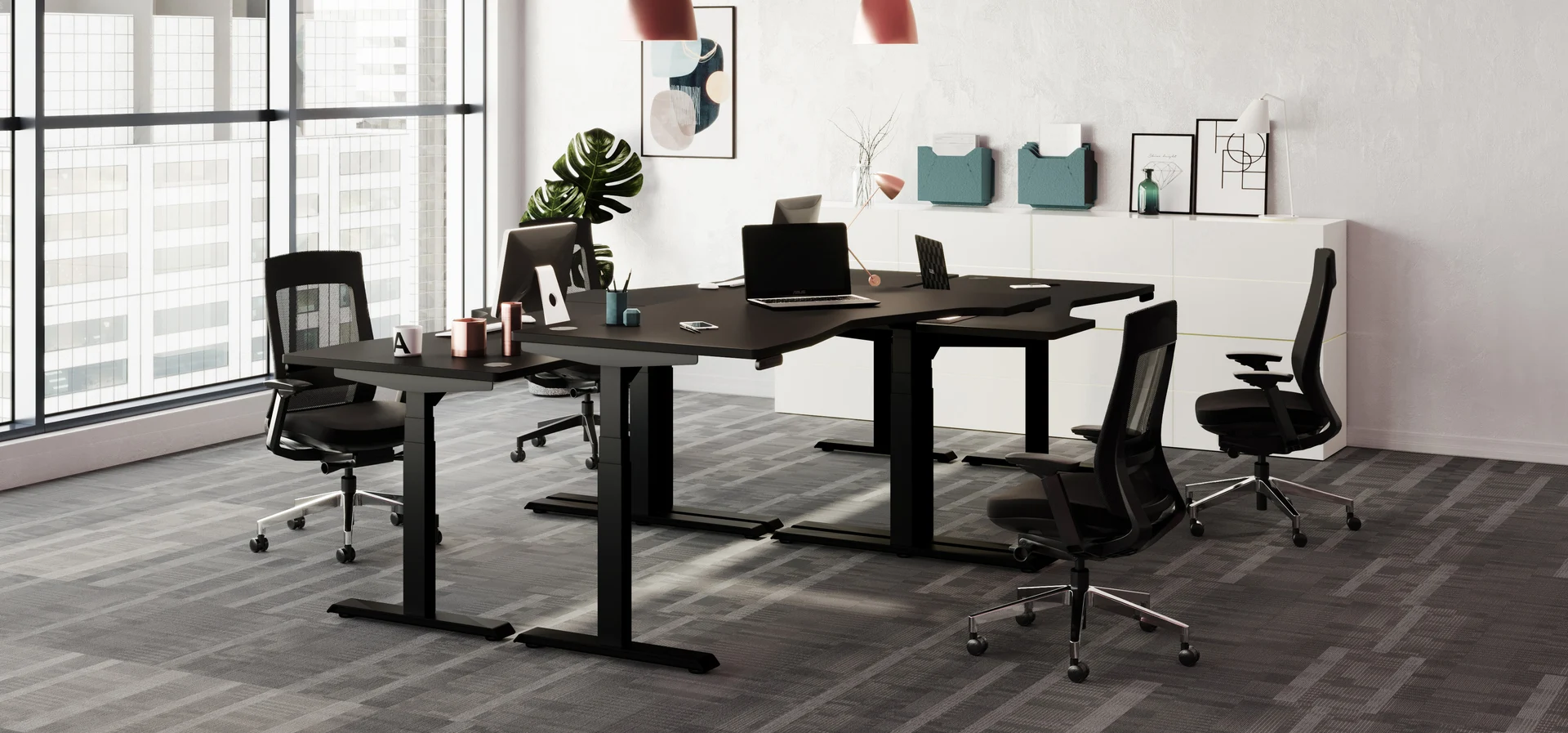
Choosing the best layout for office designs is no longer a simple decision about where desks go. Office designs now plays a central role in productivity, wellbeing, collaboration, and how a business presents itself to staff and visitors. A well planned office layout supports the way people actually work, rather than forcing teams to adapt to a space that does not suit them.
Modern office designs balance focus, communication, comfort, and flexibility. There is no single layout that works for every organisation, but there are clear principles that help determine what will work best for your space, your team, and your goals. This guide explores the most effective office designs and layouts, the factors that influence them, and how to avoid common mistakes.
Key Takeaways
- The best office layout supports both focused work and collaboration
- Different teams and roles often need different types of space
- Open plan layouts are not always the most productive option
- Zoning and acoustic control are critical in modern office design
- Professional space planning leads to better long term outcomes
Why office layout matters more than ever
The link between office design and productivity
Office design has a direct impact on how efficiently people work. Layout affects everything from noise levels and lighting to how easily colleagues can communicate. A poorly planned office can lead to distractions, frustration, and wasted time, even if the furniture itself is high quality.
When office designs align with the tasks employees carry out each day, productivity improves naturally. Staff spend less time adapting to their environment and more time focusing on their work. Clear circulation routes, appropriate desk spacing, and access to quiet areas all contribute to better concentration and fewer interruptions.
Research consistently shows that employees perform better in environments designed around their needs rather than rigid layouts. Office designs should remove barriers to work, not introduce them.

How layout influences collaboration and focus
The layout of an office determines how people interact. Open spaces can encourage collaboration, but they can also increase noise and visual distraction if not carefully managed. On the other hand, private offices offer focus but may reduce spontaneous communication.
The best office layouts strike a balance. Teams that need frequent collaboration benefit from shared areas, while individuals who handle complex or confidential tasks need quieter spaces. Office design should allow employees to move easily between these environments depending on what they are working on at any given time.
Layout choices also influence workplace culture. An office designed entirely around isolation or constant visibility can feel restrictive. Flexible layouts support both teamwork and autonomy, creating a healthier working environment.
Employee wellbeing and workspace planning
Employee wellbeing is now a core consideration in office designs. Layout affects posture, movement, access to natural light, and stress levels. Poor spacing, constant noise, or a lack of privacy can quickly lead to fatigue and dissatisfaction.
A thoughtful office layout encourages movement throughout the day, reduces visual clutter, and provides areas where employees can step away from their desks. Breakout spaces, quiet zones, and comfortable seating all support mental and physical wellbeing.
Wellbeing focused office design also helps with retention and recruitment. Employees are more likely to stay in workplaces where the environment supports their health and comfort.
Understanding different types of office layouts
Open plan office layouts
Open plan offices remain one of the most common layouts, particularly for growing businesses. They remove physical barriers between desks, making communication easier and allowing teams to expand without major structural changes.
When designed well, open plan layouts can feel light, flexible, and social. They are often cost effective and make better use of available floor space. Visibility across the office can also support collaboration and a sense of shared purpose.
However, open plan layouts require careful planning. Without acoustic treatments, zoning, and defined walkways, they can quickly become noisy and distracting. Office design solutions such as acoustic panels, desk screens, and quiet rooms are essential to make open plan spaces work effectively.
Cellular or private office layouts
Cellular layouts divide the office into individual rooms or enclosed spaces. This approach suits organisations that require confidentiality, deep focus, or frequent private conversations. Legal firms, finance teams, and senior leadership roles often benefit from these types of office designs.
Private offices offer excellent control over noise and interruptions. Employees can focus without distraction, which can improve accuracy and efficiency for complex tasks. They also provide clear boundaries for sensitive work.
The drawback is reduced flexibility and collaboration. Cellular layouts can feel isolating if not balanced with shared spaces. Modern office design often blends private offices with communal areas to avoid silos and encourage interaction where appropriate.
Hybrid and activity based working layouts
Hybrid and activity based layouts are increasingly popular as work patterns evolve. These layouts provide a variety of spaces designed for specific tasks, such as focused work, collaboration, meetings, and relaxation.
Rather than assigning a single desk to each employee, activity based office designs encourages people to choose where they work based on what they are doing. This approach supports flexibility, movement, and better use of space.
Successful hybrid layouts rely on clear zoning and strong communication. Employees need to understand how and when to use each area. When implemented well, this type of office design offers the best balance between productivity and wellbeing.
Factors that determine the best office layout
Team size and business structure
The size of your team has a significant influence on layout decisions. Small teams may benefit from shared spaces that encourage communication, while larger organisations often need more structure to manage noise and movement.
Business structure also matters. Departments that work closely together should be positioned nearby, while teams with different workflows may require separation. Office design should reflect how information flows through the organisation.
Future growth must also be considered. A layout that works today should still function as the business expands. Flexible furniture systems and adaptable zones help avoid costly redesigns later.
Nature of work and daily tasks
Understanding how employees spend their time is essential when planning an office layout. Roles that involve calls, meetings, or collaboration require different spaces from roles focused on individual concentration.
Office designs should support these differences rather than applying a one size fits all solution. For example, creative teams may benefit from open collaborative zones, while technical roles may need quieter environments.
Observing daily workflows and speaking with employees provides valuable insight. Layout decisions grounded in real working patterns lead to more effective and comfortable spaces.
Technology, equipment, and future growth
Technology plays a major role in modern office designs. Layouts must account for power access, data connectivity, screens, and collaborative tools. Poor planning in this area can lead to clutter and inefficiency.
Equipment size and usage also influence spacing. Storage, printers, and specialist equipment need to be accessible without disrupting workflow. Office layouts should minimise unnecessary movement while avoiding congestion.
Planning for future upgrades is equally important. Flexible layouts allow businesses to adapt to new technology without major structural changes.
Designing for collaboration without sacrificing focus
Zoning spaces for different work styles
Zoning is one of the most effective tools in office design. It involves grouping spaces by activity, such as quiet work zones, collaborative areas, and social spaces. This approach reduces conflict between different work styles.
Clear zoning helps employees choose the right environment for their tasks. Visual cues, furniture choices, and layout changes can all reinforce these zones without the need for physical barriers.
Zoning also improves flow through the office. When spaces are clearly defined, movement becomes more intuitive and less disruptive.
Acoustic control and visual privacy
Noise is one of the most common complaints in offices. Acoustic control should be a priority in any layout, particularly in open plan environments. Soft furnishings, acoustic panels, and ceiling treatments all help reduce sound travel.
Visual privacy is equally important. Desk screens, planting, and strategic layout choices prevent employees from feeling constantly observed. This improves comfort and reduces cognitive fatigue.
Office designs that addresses both sound and sight creates calmer, more productive environments without sacrificing openness.
Meeting areas, breakout spaces, and informal zones
Meeting rooms and breakout spaces play a key role in collaboration. Their placement within the office layout affects how often they are used and how disruptive they are to nearby work areas.
Informal zones encourage spontaneous discussion and creative thinking. These spaces should feel distinct from desk areas, using different furniture and lighting to signal a change in activity.
Balancing formal and informal spaces allows collaboration to happen naturally without overwhelming focused work areas.
Making the most of small and large office spaces
Best layouts for small offices
Small offices benefit from layouts that maximise flexibility and light. Open plan arrangements often work well, provided noise is managed carefully. Multi functional furniture helps make the most of limited space.
Storage should be integrated into the layout to avoid clutter. Wall mounted solutions and shared storage areas keep desk spaces clear and usable.
Small office design also benefits from visual openness. Glass partitions and light colours help spaces feel larger and more comfortable.
Planning layouts for large or multi team offices
Large offices require clear structure to function effectively. Zoning becomes even more important to prevent noise and confusion. Departments should be grouped logically, with shared facilities positioned centrally.
Wayfinding also plays a role in large office designs. Clear sightlines and intuitive layouts help employees and visitors navigate the space easily.
Flexibility remains important at scale. Modular furniture and adaptable meeting spaces allow large offices to respond to changing needs without major disruption.
Common office layout mistakes to avoid
Overcrowding desks and walkways
One of the most frequent mistakes in office design is overcrowding. Cramming too many desks into a space reduces comfort and increases noise, leading to lower productivity.
Adequate spacing between desks and clear walkways are essential. Employees need room to move without disturbing others. Office layouts should prioritise comfort over maximising headcount.
Overcrowding also affects safety and accessibility. Clear circulation routes support compliance and create a more inclusive environment.
Ignoring storage and circulation space
Office storage solutions are often overlooked during layout planning for office designs. Without adequate storage, offices quickly become cluttered, affecting both appearance and efficiency.
Circulation space is equally important. Poorly planned layouts force people to walk through work zones, increasing interruptions. Clear routes reduce disruption and improve flow.
Good office design treats storage and circulation as core elements rather than afterthought
Designing without employee input
Employees use the office every day, yet their input is sometimes ignored. Designing without consultation often leads to layouts that look good but do not function well.
Engaging staff during the planning process provides valuable insight into real needs and preferences. It also increases buy in once the space is complete.
Office design that reflects employee feedback is more likely to succeed long term.
How professional office designs improve layout decisions
The value of space planning and visualisation
Professional space planning transforms ideas into workable layouts. Designers consider proportions, flow, and functionality in ways that are difficult to visualise without experience.
Tools such as 2D layouts, 3D visuals, and virtual reality previews allow businesses to see how a layout will function before work begins. This reduces risk and supports better decision making.
Visualisation also helps align stakeholders, ensuring everyone understands how the space will be used.
When to involve an office fit out specialist
Involving a specialist early in the process leads to better outcomes. Experienced teams understand how to balance aesthetics, practicality, and compliance.
An office fit out specialist can identify issues before they become costly problems. They also coordinate design, furniture, and installation into a single process.
For many businesses, working with a trusted partner such as iGate Interiors ensures the layout supports both immediate needs and long term goals.
Frequently asked questions about office designs
What is the most productive office layout?
The most productive layout depends on the type of work being done. Offices that combine quiet areas with collaborative spaces tend to perform best. Flexibility and zoning are key factors.
Is open plan still the best option?
Open plan layouts can work well, but they are not suitable for every organisation. Without proper acoustic control and alternative spaces, they can reduce focus. Hybrid layouts often offer better results.
How often should an office layout be reviewed?
Office layouts should be reviewed whenever business needs change. Growth, new technology, or shifts in working patterns may all require adjustments. Regular reviews help ensure the space remains effective and comfortable.