
Interior design for the office is not simply about how a space looks. It shapes how a space feels, how it functions, and how people interact within it. In an office environment, interior design plays an even bigger role. It can influence productivity, comfort, collaboration, and the overall impression a business gives to clients and staff alike.
The 7 rules of interior design provide a practical framework that helps bring structure to creative decisions. Rather than guessing what works, these principles guide you towards spaces that feel balanced, considered, and genuinely enjoyable to use. Whether you are planning a full office fit out or refreshing part of a workspace, understanding these rules will make a noticeable difference.
Key takeaways
- The 7 rules of interior design create spaces that feel balanced and cohesive
- Office interiors benefit from applying these principles to improve usability and comfort
- Each rule plays a different role, but they work best when combined
- Good interior design supports both visual appeal and day to day function
- Small details and thoughtful planning often have the biggest impact
- These rules apply to both home and office environments, but are especially valuable in workplaces

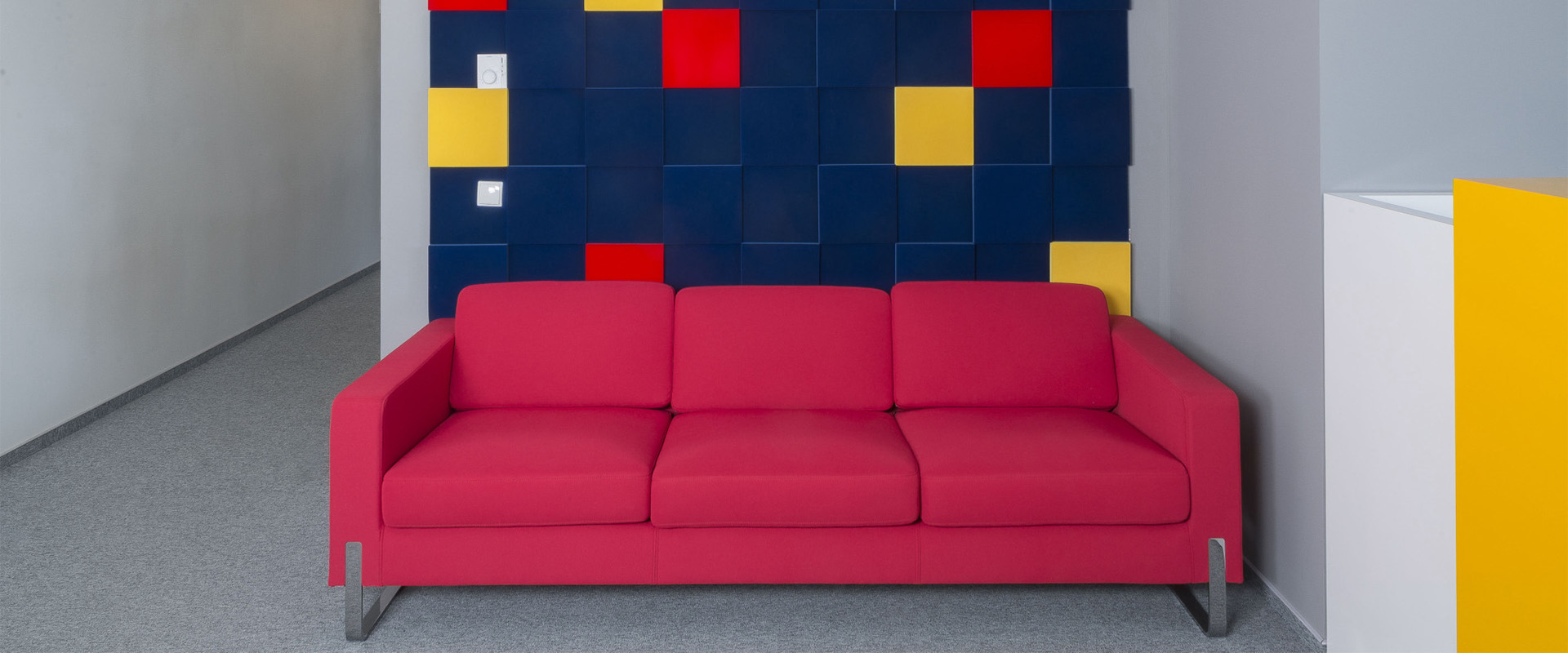
FBD Mullingar sought a comprehensive refurbishment of their Mullingar office, focusing on a modern aesthetic and functional workspace.
What are the 7 rules of interior design?
The 7 rules of interior design are widely recognised across the office interiors industry. They help designers and businesses avoid disjointed spaces and instead create interiors that feel natural and well resolved.
Balance
Balance is about distributing visual weight so a space feels stable. In an office, this might involve placing larger furniture pieces in a way that does not overwhelm one side of a room, or ensuring that open areas are offset by functional zones.
A reception area, for example, often works best when there is a clear visual anchor such as a desk or feature wall, balanced by softer seating or open space nearby. In open plan offices, balance becomes even more important. Rows of desks, walkways, and breakout areas all need to sit comfortably together without the layout feeling crowded or uneven.
A balanced workspace tends to feel calmer and easier to navigate, which is exactly what you want in a busy office environment.
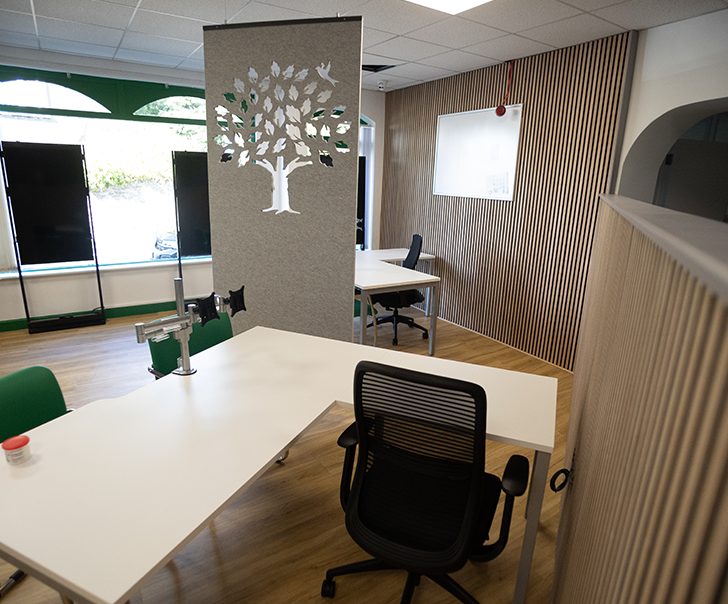
The FBD Wicklow project involved complete interior updates, new flooring, enhanced media integration, new office furniture, joinery works, and a full repaint of the premises.
Proportion and scale
Proportion and scale are often what make an office interior feel “right” without anyone being able to explain why. They relate to how objects sit within a space and how they relate to each other.
Oversized desks in a small room will quickly feel restrictive. Equally, a large open office with undersized furniture can feel sparse and underwhelming. Ceiling height, circulation space, and furniture dimensions all contribute to how comfortable a workspace feels.
In office interiors, getting this right is essential not only for appearance but also for practicality. Staff need space to move, meet, and work without feeling cramped. This is where professional space planning becomes invaluable, particularly for businesses considering a full redesign
Harmony and unity
Harmony and unity bring everything together. Without them, an office can feel like a collection of separate ideas rather than a single cohesive environment.
This principle is achieved by repeating colours, materials, and finishes in a thoughtful way. For instance, a colour used in the reception area might reappear subtly in meeting rooms or soft seating. Timber tones, metal finishes, or fabric choices can also be echoed across the workspace.
In a modern office, harmony is especially important because there are often multiple zones serving different purposes. When these areas feel connected, the office becomes easier to understand and more pleasant to move through.
Contrast
Contrast introduces visual interest and prevents a space from feeling flat. It is created by combining different elements such as light and dark tones, smooth and textured materials, or bold and neutral colours.
In office design, contrast can help define areas. A quiet workspace might use softer tones, while a collaborative zone or breakout area could feature stronger colours or more dynamic materials. Even subtle contrasts, such as pairing soft seating with sleek desks, can add depth to a space.
The key is to use contrast with intention. Too little and the office can feel dull. Too much and it becomes distracting.
Emphasis
Every space benefits from a focal point. Emphasis is the principle that draws attention and gives a room character.
In an office, this could be a statement reception desk, a feature wall with branding, a striking lighting installation, or even a well designed breakout area. These elements help define the identity of the workspace and make it more memorable.
A well placed focal point also helps guide people through the office. It creates visual anchors that make the space feel organised rather than overwhelming.
Rhythm
Rhythm is about creating flow through repetition. It helps guide the eye and gives a sense of movement within a space.
In an office, rhythm might be seen in repeated lighting fixtures, consistent desk layouts, or recurring colours and materials. These repeated elements create a sense of order and continuity, especially in larger workspaces.
Without rhythm, an office can feel disjointed. With it, the entire space feels more connected and easier to navigate.
Details
Details are where interior design truly comes to life. They are often the smallest elements, but they have a lasting impact.
In office interiors, details include finishes, handles, stitching, signage, planting, and even cable management. These touches influence how polished and professional a space feels.
Good detailing also improves usability. Thoughtful storage solutions, well placed power points, and acoustic considerations all contribute to a better working environment. This is often where the difference between an average office and a great one becomes clear.
Why these interior design rules matter in modern spaces
Office interior design rules are not just theoretical. They directly influence how a space performs in real life.
Creating functional environments
An office needs to work smoothly. People should be able to move around easily, find what they need, and use the space without frustration.
Applying interior design principles in your office helps create layouts that support daily tasks. Balance and proportion ensure there is enough space to move, while rhythm and harmony make the layout feel logical rather than confusing.
A well designed office often feels intuitive, even for someone visiting for the first time
Improving wellbeing and mood
The way a space looks and feels has a direct effect on mood. Harsh lighting, cluttered layouts, or poor material choices can make an office feel tiring.
Interior design helps create an office environment that feel comfortable and welcoming. Softer materials, thoughtful lighting, and balanced layouts all contribute to a more pleasant atmosphere.
This matters for staff as much as it does for visitors. A comfortable workspace can make a noticeable difference to how people feel throughout the day.
Supporting branding in commercial interiors
An office is also a reflection of the business. Interior design can communicate professionalism, creativity, or reliability without a single word being spoken.
Consistent use of colour, materials, and layout can reinforce a brand’s identity. Even subtle design choices can help create a strong and lasting impression.
For businesses investing in a new workspace, this is often a key consideration. A well designed office can quietly support wider business goals.
How to apply the 7 rules in your own space
Understanding the rules is one thing. Applying them is where the real value lies.
Start with layout and space planning
Before thinking about colours or furniture, focus on layout. Consider how the space will be used, how people will move through it, and where key activities will take place.
A strong layout sets the foundation for everything else. It ensures that balance, proportion, and flow are built into the space from the beginning.
Choose colours and materials carefully
Colour and material choices should support both the function and the feel of the office. Neutral bases with carefully selected accents often work well, especially in professional environments.
Repeating materials across different areas helps create harmony, while introducing contrast keeps the space interesting.
Layer lighting effectively
Lighting is often overlooked, yet it plays a crucial role in interior design. A combination of ambient, task, and feature lighting usually works best.
In an office, this might include overhead lighting for general use, desk lighting for focused work, and softer lighting in breakout areas.
Add personality through accessories
Accessories bring a space to life. Artwork, plants, and soft furnishings can add warmth and character to an office, as well as enhance your brand image.
These elements should feel intentional rather than random. Even small touches can make a workspace feel more human and less clinical.
Common interior design mistakes to avoid
Even well intentioned projects can fall short if key principles are ignored. In office interiors, these mistakes often affect not only how the office space looks, but how it performs day to day. Small oversights can quickly become ongoing frustrations for staff and visitors alike.
Overcrowding a space
Trying to fit too much into an office often leads to cluttered layouts and restricted movement. Leaving space to breathe is just as important as filling it.
It can be tempting to maximise every square metre, especially in smaller offices, but this often works against the overall design. Tight walkways, cramped desks, and overcrowded meeting areas can make the space feel stressful rather than efficient. A well planned office should allow people to move comfortably, hold conversations without disruption, and use each area without feeling boxed in.
Sometimes, removing one or two unnecessary elements can improve both the appearance and functionality of the space far more than adding something new.
Ignoring scale and proportion
Furniture that is too large or too small for the space can make an office feel awkward. Getting scale right is essential for both comfort and appearance.
This mistake often shows up in meeting rooms and reception areas. Oversized tables can dominate a room, leaving little space to move, while undersized furniture can make a space feel unfinished or lacking presence. The relationship between ceiling height, floor area, and furniture size all needs to be considered together.
When scale is handled well, the office feels naturally balanced. When it is not, something always feels slightly off, even if the individual pieces are high quality.
Poor lighting choices
Flat or harsh lighting can undermine even the best designed office. Layered lighting usually provides a more balanced and comfortable environment.
Relying solely on overhead lighting often creates a uniform, slightly sterile feel. It can also lead to glare or uneven light distribution, particularly in areas where people are working on screens. Introducing task lighting and softer ambient lighting helps create depth and improves comfort throughout the day.
Lighting also plays a role in defining different areas within an office. A breakout space with softer lighting will feel very different from a brightly lit workstation area, even if the layout is similar.
Lack of cohesion
Mixing too many styles, colours, or materials without a clear plan can result in a disjointed space. Harmony is key to creating a professional and polished interior.
This often happens when decisions are made in isolation rather than as part of a wider design approach. A chair chosen for comfort, a desk selected for practicality, and a colour picked on preference might all work individually, but together they can feel disconnected.
A cohesive office does not need to be uniform, but it should feel intentional. Repeating key elements, maintaining a consistent palette, and aligning finishes across different areas will help create a space that feels complete rather than pieced together over time.
Can you break the rules of interior design?
The rules of interior design are there to guide, not restrict. Once you understand them, there is room to experiment. In fact, some of the most memorable office interiors come from knowing when to follow the rules closely and when to push against them in a controlled way.
The key is intention. Breaking a rule without understanding it often leads to a space that feels disjointed. Bending a rule with purpose can create something distinctive and engaging.
When creativity takes the lead
Some offices benefit from a more creative approach. Bold colours, unusual layouts, or unexpected materials can add personality and make a workspace stand out.
This is often seen in creative industries, startups, or brands that want their office to reflect a more energetic or unconventional identity. A vibrant colour palette, for example, might replace a more neutral scheme, or a breakout space might be designed to feel more like a lounge than a traditional office area.
Even layout can become more fluid. Instead of clearly defined zones, spaces may overlap or serve multiple purposes, encouraging movement and interaction. Feature elements such as statement lighting, murals, or bespoke furniture can also play a bigger role in shaping the overall feel of the office.
That said, creativity still works best when it is anchored by some level of structure. Even the most playful workspace usually has an underlying sense of order that keeps it functional.
How to bend rules without losing balance
Even when breaking the rules, it is important to maintain a sense of balance and cohesion. The space should still feel intentional rather than random.
For example, an office might introduce strong contrast through bold colours, but keep furniture forms simple and consistent to maintain harmony. Or it might use asymmetry in layout while still ensuring that circulation and usability are not compromised.
It is also helpful to keep one or two principles steady while experimenting with others. If you choose to push boundaries with colour and materials, maintaining proportion and scale becomes even more important. Likewise, if the layout is unconventional, consistent detailing can help tie everything together.
Good office interior design allows for creativity while still respecting the fundamentals. The most successful office interiors often sit somewhere in the middle, combining clear design principles with enough individuality to make the space feel unique.
Conclusion
The 7 rules of interior design provide a strong foundation for creating office spaces that look good and work well. In office interiors, these principles are especially valuable because they influence both appearance and performance.
By applying balance, harmony, contrast, emphasis, proportion, rhythm, and attention to detail, businesses can create offices that feel professional, comfortable, and practical. Whether planning a full office redesign or making smaller improvements, these principles offer a reliable starting point for better office spaces.
Frequently asked questions
What is the most important rule in interior design?
There is no single most important rule, as all 7 work together. However, harmony is often key because it brings everything together into a cohesive whole.
How do beginners start with interior design?
Start with layout and function. Focus on how the space will be used, then build around that with colours, materials, and furniture.
What colours work best in interior design?
Neutral tones often work well as a base, with accent colours added for interest. The best choice depends on the purpose of the space and the desired atmosphere.
How do you make a room look professionally designed?
Consistency is key. Use a clear palette, maintain balance, and pay attention to details. Avoid overcrowding and ensure everything feels intentional.
What is the 3-5-7 rule in interior design?
The 3-5-7 rule refers to grouping items in odd numbers, such as 3, 5, or 7, to create a more natural and visually appealing arrangement.
What is the 3 4 5 rule in interior design?
The 3 4 5 rule refers to grouping design elements in sets of 3, 4, or 5 to create visual harmony in your office. Each number plays a different role in how an office space feels. Groups of 3 tend to feel dynamic and natural. Groups of 4 bring structure and balance. Groups of 5 introduce complexity and visual depth.
What is the 60/40 rule in interior design?
The 60/40 rule suggests dividing a space visually into a dominant style or colour (60 percent) and a secondary element (40 percent). This helps create balance while still adding interest.

Our client sought to transform a corner of their large atrium space into a dedicated canteen area, providing staff with a comfortable dining and relaxation space using the 7 rules of interior design to create a bespoke, modern space.