
Office lighting is one of the most important yet underestimated elements of workplace design. The way an office is lit affects everything from employee productivity to comfort and mood. Good office lighting allows people to concentrate, reduces eye strain, and creates a professional atmosphere that supports different styles of work.
Many businesses only start thinking about office lighting when problems appear. Harsh glare on computer screens, dark corners, or uneven brightness across the workspace can quickly make an office uncomfortable. By contrast, a well planned lighting system improves both functionality and appearance.
Modern offices rely on a combination of natural daylight, ambient lighting, and targeted task lighting. When these elements work together, office lighting becomes a powerful tool for creating a workplace that feels productive, welcoming, and efficient.
Key Takeaways
- Effective office lighting improves concentration and reduces eye strain
- Natural daylight should be maximised wherever possible
- Offices benefit from layered lighting that includes ambient, task, and accent lighting
- Colour temperature influences comfort, focus, and energy levels
- LED fixtures provide efficient and long lasting office lighting
- Lighting design should be considered early during workspace planning

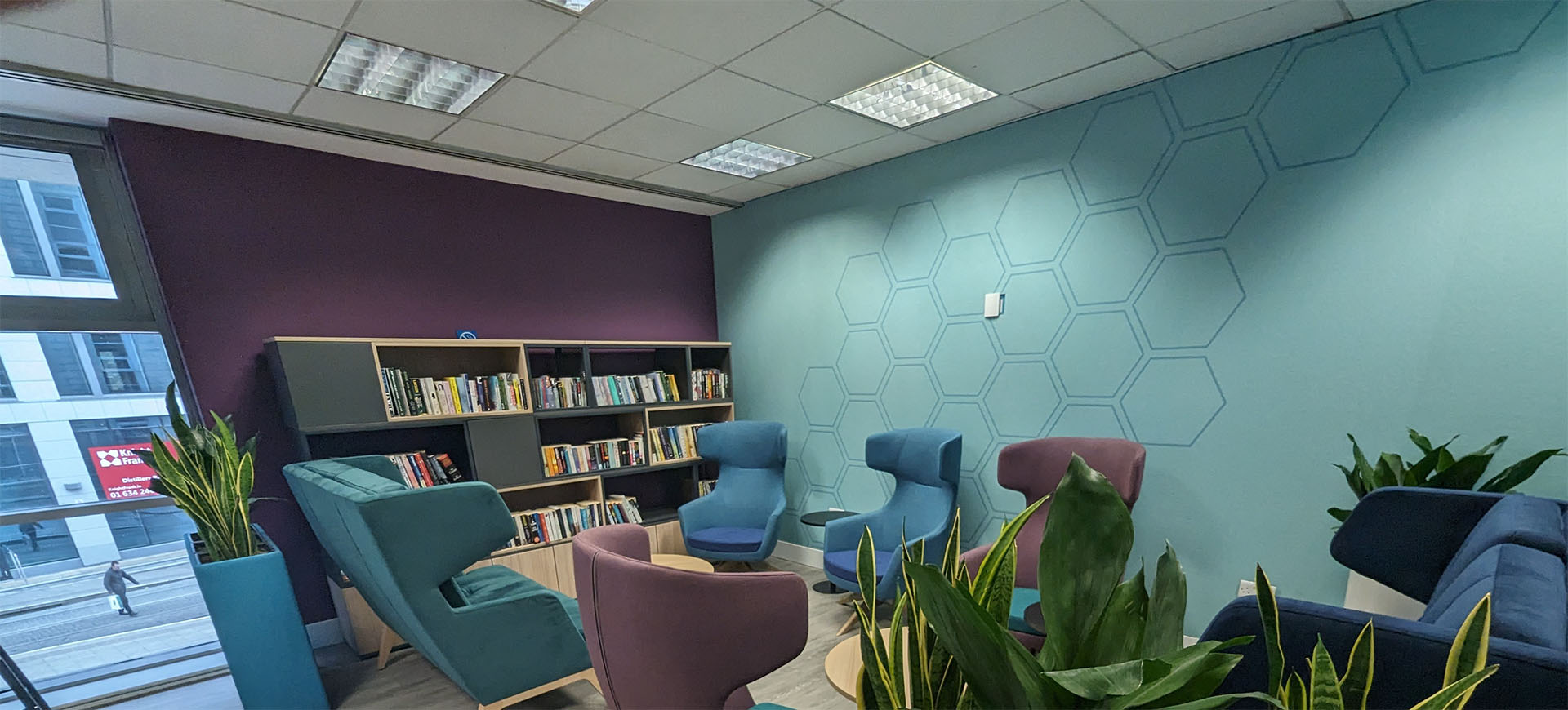
The HK International project included bespoke boardroom furniture, new flooring, office reconfigurations, and a vibrant colour scheme
Why Office Lighting Matters in Modern Workplaces
The Link Between Office Lighting and Employee Productivity
The quality of office lighting has a direct effect on how people perform throughout the day. Bright, evenly distributed lighting helps employees read documents clearly, focus on screens, and stay alert during long working hours.
When office lighting is well designed, employees can concentrate for longer without feeling fatigued. Balanced illumination prevents the eye strain that often comes from working under overly dim or harsh lighting conditions.
In modern workplaces, employees often switch between tasks that require different levels of visual attention. Reading printed documents, analysing spreadsheets, or participating in video calls all benefit from good office lighting. Creating a system that supports these activities helps teams maintain efficiency throughout the day.
Thoughtful office lighting also contributes to a positive workplace atmosphere. A bright and comfortable workspace can make employees feel more motivated and engaged in their work.
How Poor Office Lighting Affects Comfort and Focus
Poor office lighting can quickly become a source of frustration. When lighting levels are inconsistent, employees may struggle to see clearly or experience glare on their screens. Over time, this can lead to headaches, eye strain, and reduced productivity.
In some offices, lighting is too bright and creates harsh reflections on computer monitors. In others, the lighting may be too dim, forcing employees to strain their eyes when reading documents or focusing on detailed work.
Uneven office lighting can also create shadows and dark spots around the workplace. This can make the office feel less comfortable and even affect the perception of the workspace.
A well balanced lighting plan ensures that every part of the office receives appropriate illumination. When office lighting is consistent and comfortable, employees are able to focus on their work without unnecessary distraction
Office Lighting as Part of Workspace Design
Office lighting should always be considered alongside layout, furniture, and overall workspace design. Lighting that works well with the office layout supports both functionality and visual comfort.
Modern office design often combines open workspaces, collaborative areas, and quiet zones. Each of these spaces benefits from slightly different lighting conditions. Workstations require bright, clear lighting, while breakout spaces may benefit from softer illumination.
Planning office lighting during a workspace redesign allows lighting fixtures to complement the layout of the office. Positioning lighting above desks, meeting areas, and walkways helps create a balanced and comfortable environment.
Companies that invest in good office lighting upgrades often notice improvements not only in productivity but also in how their workplace feels day to day.
Natural Light vs Artificial Office Lighting
Why Natural Light Should Be Maximised
Natural daylight remains one of the most valuable forms of office lighting. Offices with large windows and strong daylight exposure tend to feel more open, energising, and welcoming.
Exposure to natural light supports wellbeing and can help regulate sleep patterns. Employees who work in environments with strong daylight often report feeling more alert and comfortable during the working day.
Maximising natural office lighting usually begins with smart space planning. Workstations positioned near windows allow employees to benefit from daylight while reducing the need for artificial lighting during bright hours.
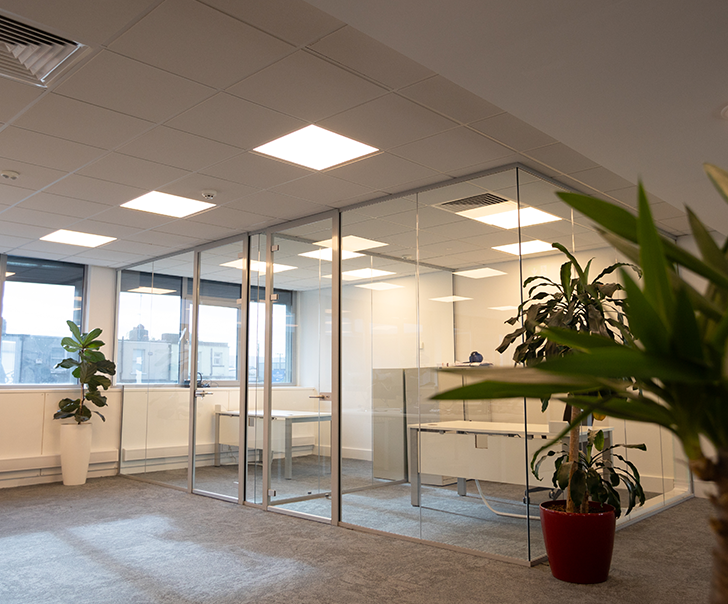
Glass partitions and open layouts can also help daylight travel further into the office. This allows more employees to benefit from natural office lighting even if they are not directly beside a window
When Artificial Office Lighting Becomes Essential
While natural light is valuable, artificial office lighting remains essential in most workplaces. Daylight levels change throughout the day and vary depending on the season.
Artificial lighting ensures that workspaces remain functional regardless of the time of day or weather conditions. It provides consistent brightness that allows employees to work comfortably even when daylight is limited.
Modern artificial office lighting can also be adjusted to mimic natural daylight. Many LED systems allow brightness and colour temperature to be controlled, creating lighting that adapts throughout the day.
The goal is not to replace natural light but to complement it. When artificial office lighting works alongside daylight, the office maintains consistent and comfortable illumination.
Types of Office Lighting You Should Know
Ambient Office Lighting for Overall Brightness
Ambient lighting forms the foundation of most office lighting systems. It provides general illumination that allows people to move around the workspace safely and comfortably.
Ceiling mounted fixtures, recessed lighting, and LED panels are commonly used to provide ambient office lighting. These fixtures distribute light evenly across the office, preventing dark corners and uneven brightness.
Without good ambient lighting, the office can feel gloomy or visually uncomfortable. Strong ambient lighting ensures that the entire workspace is clearly visible and easy to navigate.
Modern LED panels are particularly popular because they deliver bright and efficient office lighting while reducing glare.
Task Lighting for Individual Workspaces
Task lighting focuses on specific work areas where additional illumination is needed. Desk lamps and adjustable lighting fixtures are the most common examples of task lighting in offices.
Employees performing detailed tasks often benefit from having direct control over their lighting. Task lighting allows them to position light exactly where it is required.
This type of office lighting is especially helpful in workstations where employees regularly read documents or work with small details. It provides focused brightness without affecting the lighting conditions of the entire office.
Providing adjustable task lighting can significantly improve comfort at individual desks.
Accent Lighting to Enhance Office Design
Accent lighting highlights particular features within the workplace. It may be used to illuminate artwork, architectural details, or feature walls within the office.
Although accent lighting is not necessary for everyday work tasks, it adds depth and character to the workspace. Offices that incorporate accent lighting often feel more visually engaging.
Many modern workplaces use accent lighting in reception areas or collaborative spaces. Soft lighting along walls or shelves can create a more welcoming atmosphere.
Accent office lighting works best when it complements the main lighting system rather than overpowering it.
Decorative Lighting in Modern Workplaces
Decorative lighting helps define the character of an office environment. Pendant lights, statement fixtures, and contemporary designs can give the workspace a unique identity.
Decorative office lighting is commonly used in breakout areas, lounges, and reception spaces. These fixtures contribute to the visual style of the office and can help separate different zones.
In many workplaces, decorative lighting becomes part of the overall brand experience. It adds personality to the environment while still providing practical illumination.
When chosen carefully, decorative lighting can transform the atmosphere of a workspace.
Choosing the Right Colour Temperature
Warm vs Cool Office Lighting
Colour temperature determines how warm or cool light appears. It is measured in Kelvin and influences how the office environment feels.
Warm lighting produces a soft yellow tone that creates a relaxed atmosphere. Cool lighting appears whiter and brighter, often helping employees feel more alert.
Office lighting typically sits between these two extremes. The aim is to create a neutral environment that supports focus without feeling harsh.
Understanding colour temperature helps businesses choose office lighting that supports both comfort and productivity.
Recommended Colour Temperatures for Offices
Most offices use lighting within the range of 3500K to 5000K. This range produces bright, neutral illumination that works well for everyday office tasks.
Lighting around 4000K is commonly used in modern office environments. It provides clear visibility without the harsh blue tones that can occur at higher temperatures.
Workstations and open plan areas usually benefit from cooler office lighting, while relaxation spaces may use slightly warmer tones.
Balancing colour temperature across the office ensures that each area supports its intended purpose.
Smart Office Lighting and Energy Efficiency
LED Office Lighting for Long Term Efficiency
LED technology has transformed office lighting in recent years. LED fixtures provide bright illumination while using significantly less energy than traditional bulbs.
LED office lighting also lasts much longer than older lighting systems. This reduces maintenance costs and minimises the need for frequent replacements.
Businesses that switch to LED lighting often notice immediate improvements in both brightness and efficiency. The technology provides consistent illumination that works well across large office spaces.
In addition to saving energy, LED office lighting also produces less heat, helping maintain a comfortable indoor environment.
Motion Sensors and Intelligent Lighting Systems
Smart lighting systems allow offices to control lighting more efficiently. Motion sensors automatically switch lights on when people enter a space and turn them off when the area is empty.
This approach reduces unnecessary energy consumption and ensures that lighting is only used when required. Meeting rooms, storage areas, and corridors particularly benefit from this type of system.
Some advanced office lighting systems also adjust brightness based on natural daylight levels. When sunlight increases, artificial lighting can automatically dim to maintain consistent brightness.
These intelligent systems improve efficiency while maintaining comfortable lighting conditions across the office.
Lighting for Different Areas of the Office
Office Lighting for Open Plan Workspaces
Open plan environments require balanced lighting that supports multiple employees working side by side. Even distribution of light prevents glare and shadows that could affect visibility.
Large LED panels or suspended lighting fixtures are commonly used to provide consistent office lighting across open workspaces. These fixtures deliver broad illumination without creating harsh reflections.
Maintaining uniform brightness helps ensure that every workstation benefits from comfortable lighting.
Office Lighting for Meeting Rooms
Meeting rooms require lighting that supports both discussion and presentations. Lighting should be bright enough for note taking while still allowing screens or presentation materials to remain visible.
Adjustable lighting systems are particularly useful in meeting rooms. Being able to dim or adjust lighting levels makes it easier to accommodate different activities.
Good office lighting in meeting rooms helps maintain a professional environment for both internal discussions and client meetings.
Office Lighting for Breakout and Relaxation Areas
Breakout spaces often benefit from softer office lighting that encourages relaxation. Warm lighting tones can help create a comfortable atmosphere where employees can take a short break from focused work.
Pendant lights, decorative fixtures, and accent lighting are commonly used in these areas. These elements create a more informal environment compared to traditional workspaces.
When designed thoughtfully, office lighting in breakout areas can contribute to employee wellbeing and workplace satisfaction.
Frequently Asked Questions About Office Lighting
What colour lighting is best for offices?
Neutral white lighting around 4000K is widely considered the best option for office lighting. It provides clear brightness that supports focus without feeling too harsh or clinical.
How bright should office lighting be?
Most offices aim for lighting levels between 300 and 500 lux depending on the type of work being done. Workstations often require slightly brighter lighting than corridors or breakout areas.
Are LED lights good for office lighting?
Yes, LED lights are one of the best choices for office lighting. They are energy efficient, long lasting, and provide consistent brightness across large workspaces.
Can office lighting improve productivity?
Good office lighting can improve productivity by reducing eye strain and helping employees stay focused. A well lit workspace supports comfort and concentration throughout the day.
What is the 5–7 lighting rule?
The 5–7 lighting rule suggests using five to seven light sources in a room rather than relying on a single fixture. Layering ambient, task, and accent lighting creates a more balanced and comfortable environment.
What are the 4 Cs of lighting?
The 4 Cs of lighting are colour, clarity, control, and comfort. These principles help ensure lighting provides good visibility while remaining adjustable and comfortable for everyday use.
What is the best lighting for a home office?
The best lighting for a home office combines natural daylight with adjustable task lighting. A neutral white light around 4000K helps maintain focus while reducing glare on screens.
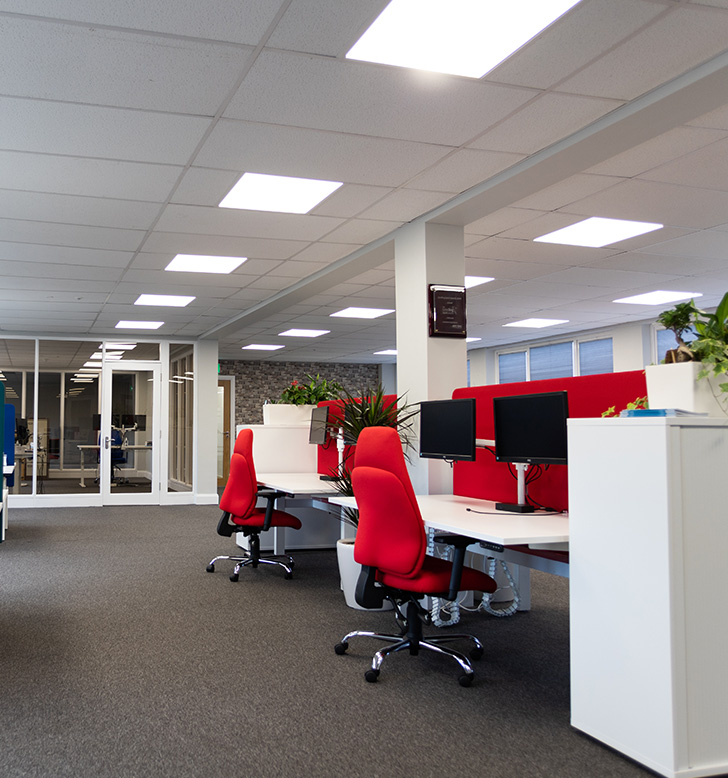
iGate Interiors undertook a bespoke ‘Refresh Project’ for Calor Gas, The works were completed on schedule over a four week period & delivered on budget.