
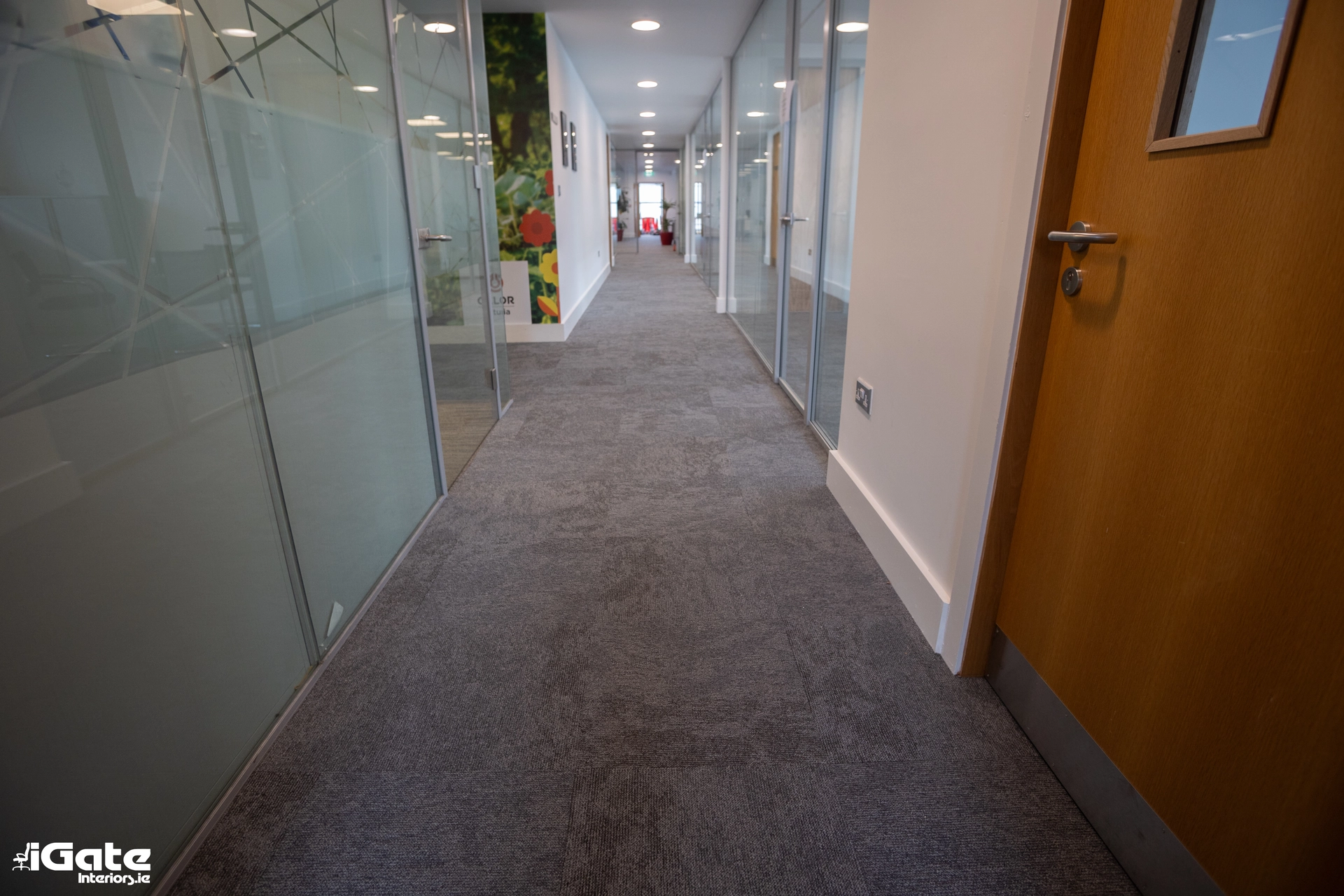
Office carpet tiles are one of the most practical flooring options for many workplaces. They are durable, flexible and relatively straightforward to maintain because individual tiles can be replaced when an area becomes stained or damaged. They can also soften footfall noise and give designers plenty of freedom with colour, pattern and zoning.
That does not mean carpet tiles are automatically the right choice for every room. Kitchens, tea points and other spill-prone areas may be better suited to hard flooring. The best approach is to choose flooring according to how each part of the office will actually be used.
Key Takeaways
- Commercial carpet tiles are a strong choice for many offices because damaged or worn sections can usually be replaced individually.
- They can help reduce the sound of footsteps and furniture movement compared with many hard flooring finishes.
- Colours and patterns can be used to define different areas of an open-plan workplace without adding physical barriers.
- Product quality and specification matter. A tile intended for light use may not be suitable for a busy reception, corridor or shared workspace.
- Carpet tiles are not ideal everywhere. Areas regularly exposed to spills or moisture often benefit from an easier-to-clean hard surface.
- The best office flooring plan may use several finishes rather than one material throughout the entire workplace.

For Calor Gas, iGate supplied and fitted over 900sqm of office carpet tiles across offices, open-plan areas, walkways and staircases as part of a wider workplace refresh.
What Are Office Carpet Tiles and Are They Good for Offices?
Office carpet tiles are modular sections of carpet that are fitted together across a floor rather than installed as one continuous roll. In commercial spaces, they are available in a wide range of constructions, textures, patterns and performance levels.
For offices, the important distinction is choosing commercial carpet tiles that are suitable for the expected level of use. A quiet private office and a busy entrance area place very different demands on flooring, even if both spaces use carpet tiles.
In general, carpet tiles are well suited to offices because modular flooring works with the way commercial interiors are maintained and changed. If one section becomes damaged, the affected tiles can often be lifted and replaced without taking up an entire room. They can also work well with raised access flooring where future access to cabling or services may be required.
Flooring should still be considered as part of the wider workplace rather than selected in isolation. During an office fit-out, factors such as circulation routes, furniture positions, acoustics, maintenance and room function all affect what flooring makes sense.

At H+K International’s Dublin headquarters, patterned office carpet tiles help define this quiet seating area, bringing texture and warmth to the wider workplace design.
Why Are Carpet Tiles So Popular in Offices?
Damaged tiles can be replaced individually
A dropped coffee in the middle of a large carpet does not necessarily need to become a major flooring project. If a carpet tile is permanently stained or damaged, the affected section can usually be replaced while the surrounding floor remains in place.
This is useful around entrances, printer areas and common walking routes. Keeping spare tiles from the original installation can make future repairs easier.
They are flexible when an office changes
Office layouts rarely remain untouched forever. Teams grow, desks move and meeting or collaboration areas can be reconfigured. Modular flooring can make these changes easier to accommodate, particularly where sections need to be lifted to access services beneath a raised floor.
That flexibility fits naturally with good office space planning, where future changes should be considered alongside today’s layout.
They can help with office acoustics
Carpeted surfaces can reduce the sound created by footsteps, chair movement and other impacts compared with many hard flooring finishes. That can be useful in open-plan offices, meeting areas and circulation routes.
Flooring is only one part of the acoustic picture, however. Where speech privacy, echo or general noise levels are a concern, flooring may need to work alongside ceiling treatments, furniture and acoustic panels.
They offer plenty of design flexibility
Different colours, textures and patterns can be combined to create subtle changes across a workplace.
In an open-plan office, a different tile colour might identify a collaboration area, circulation route or informal seating zone without adding another wall. Used carefully, flooring becomes part of the office design rather than simply the surface beneath it.
What Are the Disadvantages of Office Carpet Tiles?
Visible joins: depending on the product, pattern and method of installation, the joins between individual tiles may remain visible. Some designs use this modular appearance deliberately, while others aim for a more continuous finish.
Quality varies: not every carpet tile is intended for the same level of footfall. Choosing primarily on purchase price can be a false economy if the product begins to show wear quickly in busy areas.
Spills still need attention: modular replacement does not make carpet immune to dirt or staining. Regular cleaning using carpet cleaner is still necessary.
Some rooms suit hard flooring better: kitchens, tea points, washrooms and spaces where liquids are frequently handled are normally more practical with a suitable hard, easy-to-clean surface.
Preparation matters: a poor subfloor cannot be ignored. The condition and suitability of the surface underneath will affect the finished installation.
These drawbacks are a good reason to make flooring decisions room by room during an office fit-out plan rather than choosing one finish and applying it everywhere.
Carpet Tiles vs Other Office Flooring Options
Carpet tiles vs broadloom carpet
Broadloom carpet is installed in larger continuous sections and can create a softer, more seamless appearance. Carpet tiles have a practical advantage when localised damage occurs because one section can often be changed without replacing a much larger area.
The right choice depends on appearance and maintenance. A formal meeting room may favour a continuous look, while a busy open-plan workspace may benefit from modular replacement.
Carpet tiles vs vinyl or LVT
Vinyl and luxury vinyl tile are hard flooring options that can be particularly useful where easy wipe-clean maintenance is a priority. Carpet tiles offer a softer underfoot feel and can help reduce impact noise, while hard flooring can make more sense around food, drinks and frequent spills.
Many offices benefit from using both. A breakout area might combine carpet beneath informal seating with hard flooring closer to a kitchenette. The same principle applies when planning canteens and breakout spaces.
Should an office use the same flooring everywhere?
Usually, there is no practical need to. Different rooms have different demands. Flooring can change according to footfall, cleaning needs, acoustics and the type of work taking place while still forming part of one coordinated interior scheme.
The goal is not to find one material that wins every comparison. It is to use the right finish in the right place.
How to Choose the Best Carpet Tiles for an Office
Start with footfall
Think about entrances, circulation routes and which areas are used throughout the day. Busy receptions may need a more robust specification than private offices or small meeting rooms.
Consider cleaning and maintenance
Lighter colours may show marks sooner, while patterns and textured finishes can be more forgiving in busy spaces. Check that the manufacturer’s recommended cleaning regime suits how the building is maintained.
Use colour with a purpose
A change in tone can mark out a meeting or collaboration zone, while a consistent base colour can connect different parts of the workplace. Too many competing patterns can make a floor feel busy.
Think about the whole acoustic strategy
If reducing workplace noise is a priority, consider flooring alongside ceilings, walls, screens, furniture and the position of noisier activities. The relationship between layout and working conditions is also explored in our guide to how office design affects productivity.
Match the flooring to the room
Office carpet tiles are particularly useful in open-plan workspaces, meeting rooms, private offices and many circulation areas when an appropriate commercial product is specified. They may be less suitable in kitchens, tea points, washrooms and other places where frequent spills or moisture are expected.
A mixed approach often works best, allowing each space to use appropriate flooring while colours and finishes keep the overall design connected.
Choosing the Right Flooring for Your Workplace
For many workplaces, office carpet tiles strike a useful balance between appearance, comfort, flexibility and practical maintenance. Their modular format is particularly valuable in offices where layouts change, access beneath the floor matters or individual areas are likely to experience heavier wear.
The strongest flooring schemes do not start by asking which material is universally best. They look at how each room is used, how much traffic it receives, what cleaning it needs and how flooring fits into the wider design. If you are planning a refurbishment, iGate Interiors can consider those choices as part of the wider office refurbishment process rather than treating the floor as an isolated decision.
Office Carpet Tile FAQs
Are carpet tiles suitable for high-traffic offices?
Yes, provided the product is designed for the expected level of commercial use. Busy entrances and circulation routes may require a more robust specification than quieter rooms.
Can individual office carpet tiles be replaced?
In most modular carpet installations, individual tiles can be lifted and replaced if they become permanently stained or damaged. Keeping spare tiles from the original batch is useful for future repairs.
Are carpet tiles easy to maintain?
They can be practical to maintain because damaged areas can be dealt with locally, but regular vacuuming and appropriate cleaning are still required. Maintenance requirements vary by product, so manufacturer guidance should be followed.
Do carpet tiles reduce office noise?
Carpet tiles can help reduce impact sounds such as footsteps and chair movement compared with many hard floors. They do not soundproof a room, and wider acoustic problems may require additional treatments.

iGate Interiors supplied and fitted over 400sqm of Desso carpet tiles throughout Presidio’s offices, open-plan areas and walkways, helping create a consistent finish across both floors.