
Biophilic office design is a way of creating workplaces that feel more connected to nature. It uses natural light, plants, organic shapes, natural materials, calming colours and better links to the outside world to make offices feel healthier, warmer and more enjoyable to use.
It does not mean turning the office into a forest or placing a plant on every spare surface. The aim is to design a space that feels more human. For modern workplaces, this can make a real difference. People now expect offices to support focus, collaboration, wellbeing and flexibility. Biophilic design helps by creating an environment that feels less clinical and more comfortable.
For businesses planning an office fit out, office refurbishment or redesign, biophilic office design can influence everything from layout and lighting to furniture, finishes and breakout spaces.
Key Takeaways
- Biophilic office design brings natural elements into the workplace.
- It can include plants, daylight, timber, stone, natural colours, soft textures and outdoor views.
- The goal is to create a more comfortable and healthier working environment.
- It can support focus, wellbeing, creativity and staff satisfaction.
- It works in both large offices and small workplaces.
- It is most effective when planned as part of the overall office design, not added at the end.

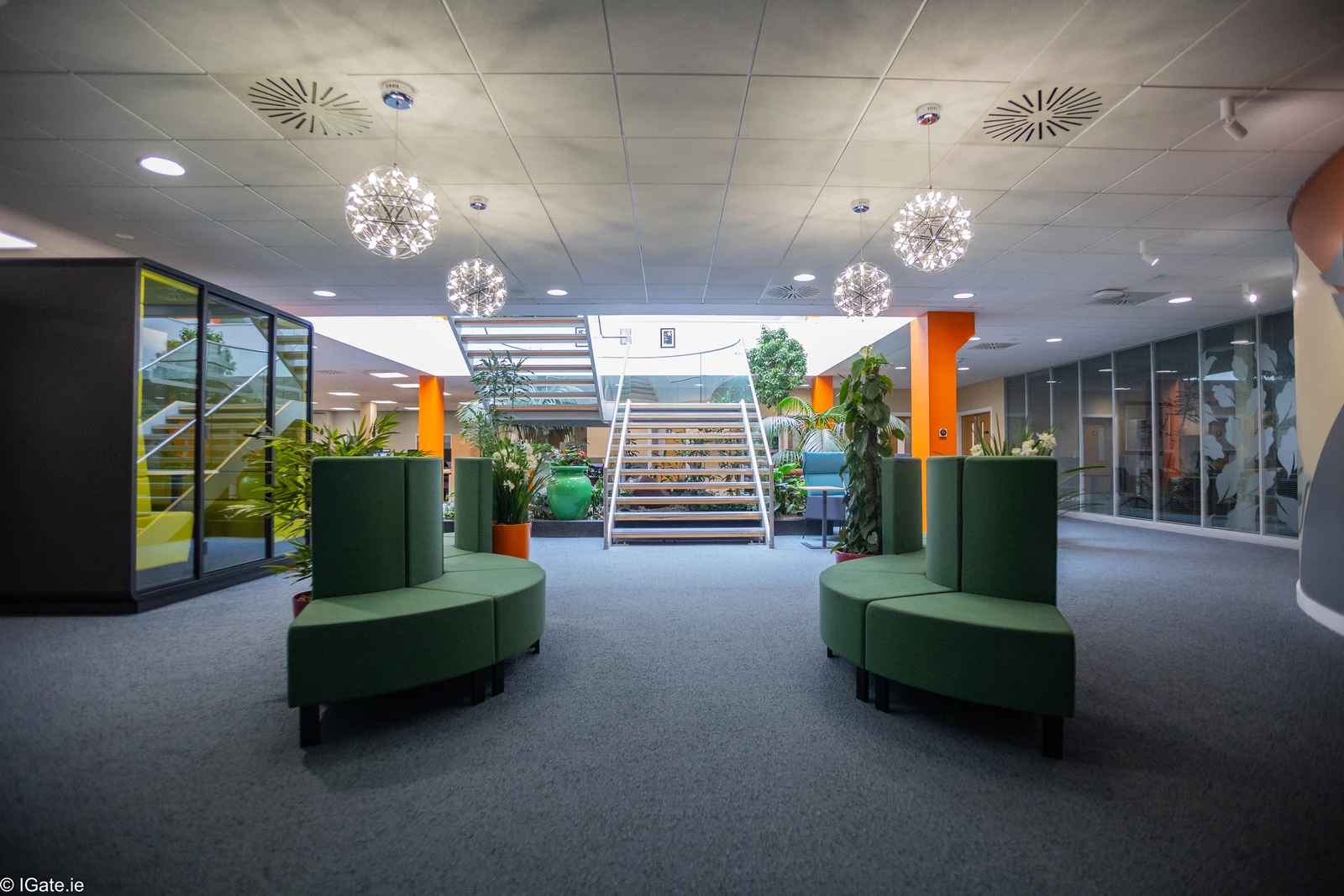
iGate Interiors created this breakout space for FBD Mullingar. Biophilic office design played a key part in creating this office space with lots of natural light and plants, as well as using natural colours to create a vibrant and welcoming modern office interior.
What Does Biophilic Office Design Mean?
Biophilic office design is based on the idea that people naturally respond well to nature. Most of us feel better in spaces with daylight, greenery, fresh air, natural textures and a sense of openness. An office design that includes these features can feel calmer and more inviting than one built only around desks, screens and artificial lighting.
In practice, biophilic design is about creating a workplace that feels balanced. It still needs to function properly as an office. It still needs meeting rooms, workstations, storage, technology and clear circulation. The difference is that these practical elements are designed with comfort and wellbeing in mind.

For H+K International, plants were strategically placed throughout their open plan office interior as part of a bright and modern office fit out.
More Than Adding Office Plants
Plants are often the first thing people think of, and they do help. They bring colour, texture and life into an office. However, true biophilic office design goes further.
It looks at how natural light travels through the space. It considers the materials people see and touch each day. It thinks about colour, sound, texture, movement and visual comfort. A few plants can improve a dull corner, but they will not fix a poor layout or harsh lighting.
Direct and Indirect Links to Nature
Some biophilic features are direct. These include indoor plants, natural light, fresh air, outdoor views and water features. They are easy to recognise and can have an immediate impact.
Other features are more subtle. These might include soft green colours, timber textures, stone effect finishes, curved shapes or patterns inspired by leaves, waves or landscapes. These indirect links can be useful in offices where outdoor views or natural light are limited.
Why Is Biophilic Office Design Popular?
The role of the office has changed. With hybrid working now common, people need stronger reasons to come into the workplace. The office has to offer more than a desk and a chair. It needs to support the type of work people come in to do, while also giving them a better experience than they might get at home.
Biophilic office design helps create that experience. It can make the office feel warmer, calmer and more welcoming. It can also help businesses move away from bland or overly corporate environments.
Wellbeing Is Part of Office Planning
Workplace wellbeing is now an important part of office design. Businesses are paying closer attention to how the physical environment affects comfort, focus and mood.
Biophilic office design supports this by creating spaces that feel more relaxed and balanced. Quiet work areas, breakout spaces and reception areas can all benefit from better light, softer materials and carefully placed greenery.
Main Elements of Biophilic Office Design
There are many ways to introduce biophilic office design into a workplace. The right approach depends on the building, budget, team size and how the office is used.
Natural Light
Natural light is one of the most valuable features in any office. It can make a space feel larger, brighter and more pleasant. Good space planning can help more people benefit from daylight by placing desks, shared spaces and breakout areas carefully.
Glazed partitions can help light travel deeper into the office. Softer artificial lighting can then be used to support areas where daylight is limited. The goal is to avoid a flat, harsh feel and create a more comfortable office lighting balance.
Plants and Greenery
Plants are a simple and effective way to add biophilic design. They can be used in reception areas, open plan offices, meeting rooms and breakout spaces. Large office planters can also help divide zones without building solid walls.
Choose planting that suits the space. Some areas may suit live plants, while others may need high quality artificial planting. Maintenance matters, because tired looking plants do not exactly scream “healthy workplace”.
Natural Materials and Texture
Materials play a major role in how an office feels. Timber, cork, stone, wool, rattan and textured fabrics can add warmth and depth. These materials can be used in furniture, flooring, wall finishes, acoustic panels and decorative details.
Texture is especially helpful in offices that feel plain or hard. Fabric seating, timber slats and acoustic wall panels can make the workplace feel softer while also improving comfort.
Nature Inspired Colour
Colour can shift the feel of a space very quickly. Greens, blues, warm neutrals, soft browns and earthy tones are all commonly used in biophilic office design.
Different areas may need different moods. Quiet zones may suit softer tones, while collaboration areas can handle stronger colours.
Practical Ideas for a Biophilic Workplace
Biophilic office design can be introduced through a full fit out or smaller updates. The most important step is to make office design choices that suit how people actually use the office.
Start With the Layout
Before adding plants or changing finishes, look at the layout. Which areas get the best daylight? Where do people need quiet? Where do informal conversations happen? Which parts of the office feel underused?
A good office design makes biophilic design more effective. A breakout area near a bright window can be paired with soft seating and planting. A focus zone can use acoustic panels, natural colours and warmer lighting.
Use Planting to Create Zones
Planting can help shape a workplace. Large planters can separate seating areas from desk zones. Green screens can add privacy. Smaller plants on shelves or storage units can bring interest without taking up much space.
This is especially useful in open plan offices, where businesses often need to create different zones without making the space feel boxed in.
Choose Softer Furniture and Finishes
Biophilic design often works well with softer shapes and finishes. Curved sofas, round tables, textured fabrics and warm timber surfaces can make spaces feel more relaxed.
This is useful in breakout areas, informal meeting spaces and reception areas. The office still needs to be practical, but it does not need to feel hard or sterile.
Can Biophilic Office Design Work in Small Offices?
Biophilic office design can work very well as part of small office design. In fact, smaller workplaces often benefit quickly because every improvement is more noticeable.
A small office does not need large living walls or expensive features. It may simply need better lighting, a warmer colour palette, compact planting and more natural textures.
Keep It Simple
The main risk in a small office is overcrowding. Too many plants, colours or materials can make the space feel busy. A lighter touch usually works better.
A small meeting room might use soft green walls, a timber table and one or two plants. A compact breakout corner might use comfortable seating, warm lighting and natural fabric. Even a narrow walkway can feel better with artwork or a textured wall finish.
Make Each Feature Work Hard
In a small office, every element should earn its place. A planter can also act as a divider. A storage unit can add warmth if it uses a timber finish. Acoustic panels can reduce noise while adding colour and texture.
Biophilic office design should make the space easier to use, not harder.
Biophilic Office Design and Office Fit Outs
Biophilic office design is most effective when considered early in an office fit out or refurbishment. This allows the layout, lighting, furniture and finishes to work together.
If it is left until the end, it can feel like an afterthought. A few plants may help, but they will not solve poor lighting, awkward zoning or uncomfortable furniture.
Plan the Full Experience
A good office fit out looks at the full working day. People need places to focus, meet, talk, pause and move around. Biophilic design can support each of these moments when given adequate consideration during your office interior design.
It can influence desk layouts, meeting rooms, breakout areas, canteens, acoustic solutions, reception spaces and furniture choices. It can also help create a more welcoming environment for clients and visitors.

iGate Interiors transformed this canteen space for the Courts Service of Ireland. With creative use of biophilic design, we installed planters as a divider to break up the interior with a relaxation and reading area from the main canteen, while keeping the whole space open and inviting.
Common Mistakes to Avoid
Biophilic office design should feel natural and useful. It should not make the office harder to maintain or turn the workplace into a theme park.
Treating Plants as the Whole Solution
Plants are helpful, but they are not enough on their own. An office can have lots of greenery and still feel uncomfortable if the lighting is poor, the layout is wrong or the furniture does not support the work being done.
Forgetting About Maintenance
Living plants need care. Materials and furniture also need to be chosen for real office use. A beautiful finish is not much help if it marks easily in a busy space.
Making It Too Themed
The best biophilic office design often feels subtle. Natural colours, warm materials, soft lighting and carefully placed greenery can create a professional result without making the office feel forced.
FAQs
What is biophilic office design?
Biophilic office design brings nature into the workplace through plants, natural light, organic shapes, natural materials and calming colours. It helps create an office that feels healthier, warmer and easier to work in.
What are the best plants for an office?
Good office plants include snake plants, peace lilies, pothos, ZZ plants, spider plants and rubber plants. These are popular because they are low maintenance and suit most indoor spaces.
Do office plants improve the workplace?
Office plants can make a workplace feel fresher, calmer and more welcoming. They are especially useful in reception areas, meeting rooms, breakout spaces and open plan offices.
Is biophilic office design only about adding plants?
No. Plants are part of biophilic office design, but natural light, timber finishes, soft textures, earthy colours and outdoor views are also important.
How can you add biophilic design to an existing office?
Start with indoor plants, warmer lighting, natural colours and textured materials. Planters, timber finishes, acoustic panels and soft seating can also help create a more natural feel.
Does biophilic office design work in small offices?
Yes. Small offices can use compact plants, natural colours, warm lighting and timber finishes to feel calmer and more comfortable without taking up much space.
What are some examples of biophilic office design?
Examples include plant walls, large planters, timber furniture, natural flooring, soft green colour schemes, curved seating, daylight focused layouts and nature inspired artwork.
How important is natural light in office design?
Natural light is very important in office design. It helps the workplace feel brighter, more open and more pleasant, especially when the layout makes good use of windows.
Are plant walls good for offices?
Plant walls can work well in offices, especially in reception areas and breakout spaces. They create a strong natural feature, but they need proper planning and maintenance.
Is biophilic office design expensive?
Biophilic office design does not need to be expensive. Simple changes such as office plants, natural colours and better lighting can make a noticeable difference.