

Sustainable office design starts with reducing unnecessary work, purchases and energy use. Keep useful furniture in service, plan around the space you actually need and choose products that can be maintained. Then make sure lighting, heating and everyday routines support those decisions.
A new finish or a few plants cannot tell you how responsibly an office has been designed. The useful questions are more practical: what are you replacing, why is it being replaced and how will the next arrangement perform over time? This guide covers those decisions for an office refurbishment or fit-out in Ireland.
Key Takeaways
- Audit furniture and finishes before drawing up a shopping list.
- Consider repair, reconfiguration and refurbishment before replacement.
- Plan lighting and building controls around real working patterns.
- Ask suppliers for specific product evidence, spare-parts information and maintenance requirements.
- Measure energy and waste improvements after handover rather than assuming the design has delivered them.

The Presidio fit-out included reupholstering existing task chairs and desk dividers for reuse, with surplus furniture passed to charitable and non-profit organisations. It shows why a furniture audit should come before a new shopping list.
1. Start Sustainable Office Design with What You Already Have
Walk through the current workplace with the people responsible for facilities, purchasing and daily use. Record the condition, dimensions and location of desks, chairs, storage, partitions and floor finishes. A photograph and a short condition note are usually more useful than an inventory that says only ’20 desks’.
Sort items into practical groups: keep in place, move elsewhere, repair, refurbish or replace. Check the reasons behind each replacement. A chair with a damaged component needs a different decision from a chair that cannot adjust to fit its user.
Before buying more, check whether existing furniture or equipment can be reused. Apply that check across departments too. Storage that is surplus to one team may solve another team’s problem.
Develop the inventory alongside your office space planning. Existing desks need to fit the proposed layout and provide suitable working space. Keeping an item should be a considered decision, with repair costs and suitability checked, rather than a reason to compromise comfort or access.
For example, replacing every storage unit because the colours differ may be unnecessary if the units are sound. Test whether moving them to less prominent areas or changing a limited number of fronts solves the design problem. Record the decision before the old furniture is booked for removal.
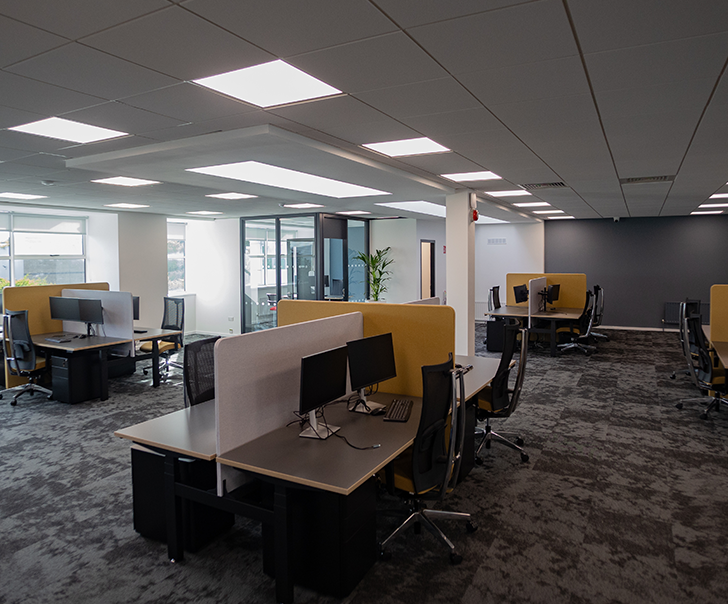
The H+K International project specified new carpet tiles where building works required them. That selective approach is worth considering before replacing finishes throughout an office simply to achieve a uniform refresh.
2. Make Energy Use Part of the Layout
Layout decisions affect how easily people can use daylight and control their surroundings. Review windows, blinds, lighting circuits and likely screen positions together. Placing desks near daylight is useful only if glare and heat can also be managed.
Specify efficient lighting with controls that avoid lighting unoccupied spaces. Ask a lighting designer or qualified contractor to review fittings, switching and sensors as a system. Replacing lamps without checking light distribution can leave bright patches, gloomy work areas or controls nobody understands.
Give frequently used workstations appropriate light and consider separate control for meeting rooms or occasional-use areas. A suitable sensor arrangement should still work when somebody is sitting quietly. The guide to office lighting explains why comfort and task requirements belong in the brief alongside efficiency.
Check the plan at different times of day. A meeting room that appears well lit during a morning survey may need a different arrangement later. Ask users where they currently close blinds, switch on extra lamps or move screens. Those details help the design team address real conditions.
Coordinate heating, cooling and occupancy
Ask the facilities team how the building is actually controlled. Moving a partition can change which rooms share a thermostat or how air reaches occupied areas. Check those effects before signing off the furniture plan.
SEAI’s building management guidance recommends matching heating, cooling and lighting schedules to occupancy and reviewing settings as conditions change. Include weekends, holidays and varying attendance. Discuss any changes with the people responsible for the building systems, keeping ventilation and occupant comfort in the brief. A lower energy bill is not a successful outcome if people cannot work comfortably.
3. Buy Furniture and Materials for a Longer Useful Life
New products will sometimes be necessary. Give suppliers a clear specification rather than asking for a vaguely ‘green’ option. Useful procurement questions cover maintenance, replacement components, expected use and the evidence behind environmental claims. Record the answers against the exact product being ordered.
Compare complete proposals. A cheaper initial purchase may involve different delivery, installation or maintenance arrangements. List those differences so the decision is based on the expected use of the item, rather than its brochure description.
Check repair and replacement options
Ask whether castors, chair mechanisms, upholstery and other likely wear parts can be replaced. Confirm who supplies them and how repairs are arranged. A warranty is useful, but it does not answer every maintenance question. Keep product codes and care instructions so the next facilities manager can find the correct component without starting again.
Make product claims specific
Ask what a claim such as ‘recycled’ actually covers. Is it the whole item, one component or only the packaging? Request the relevant supporting document and check that it applies to the selected model or material. Treat an environmental label as evidence for its stated scope, rather than proof that the product is best in every respect.
Choose finishes people can maintain
Consider cleaning, wear and repair before choosing a finish from a sample board. Ask what happens after a spill or damaged panel. Replaceable upholstery or individual flooring sections may make future repairs easier, depending on the system. Specify materials for the actual setting and obtain the manufacturer’s maintenance guidance before ordering.
Allow the office to change
Check whether desks, storage and meeting areas can accommodate likely changes without a complete refit. Standard dimensions and compatible components can make rearrangement more practical. During 2D and 3D office design, test an alternative team arrangement as well as the preferred plan. Avoid buying extra furniture solely to fill every available corner.
4. Plan Waste Reduction Through Installation and Daily Use
Waste prevention needs an owner and a place in the programme. It is difficult to find a suitable home for surplus furniture when it must leave the building tomorrow. Include removal, storage and handover arrangements in the office fit-out plan, with realistic time for each decision.
Agree what happens to outgoing items
Identify potential internal users, refurbishment services or suitable reuse organisations before removal. Share accurate dimensions and condition information. Confirm that a recipient can accept the items and agree collection arrangements; an intended donation is not a completed reuse route.
For materials that cannot be retained, ask the contractor how separate waste streams will be managed and what records will be provided. Discuss packaging with suppliers too. Consolidated deliveries or take-back arrangements may be possible, but check the actual service rather than assuming it is included in an installation quote.
Build these arrangements into the programme alongside deliveries. If reusable items need temporary storage, confirm where they will be kept and how damage will be avoided. Ask for a handover record when items leave the site so the project file reflects what actually happened.
Make everyday choices convenient
The canteen and breakout layout should support reusable cups, washing up and clearly labelled recycling bins. Provide enough storage for the items people are expected to reuse. A policy asking everyone to avoid disposable cups will struggle if there is nowhere to wash or put a mug.
Agree waste-separation procedures with the cleaning team and collection provider. Check that labels match the materials the service accepts. Keep printer settings, shared equipment and end-of-day checks in the operational handover too. Design provides the facilities; named people keep them working.
5. Use a Practical Sustainability Checklist Before Sign-Off
Before approving a commercial office fit-out, ask the project team to demonstrate how the brief has been addressed. This does not need to become a large reporting exercise. A short decision record can show what is being kept, what is being purchased and who will check the outcome.
- Existing assets: has each major furniture or finish category been assessed for retention or repair?
- New purchases: are dimensions, maintenance needs, replacement parts and supporting product documents recorded?
- Building systems: have the lighting and services teams checked the proposed layout and control arrangements?
- Installation: are retained items protected and outgoing items assigned a confirmed destination?
- Handover: do staff know how to use controls and report faults?
- Review: is someone responsible for checking energy readings, waste records and user feedback after occupation?
Keep this information with the project drawings and product schedule. It will be useful when a chair needs repairing, a team moves or the office is refurbished again. The aim is to make the next sensible decision easier, rather than to produce a folder nobody opens.
6. Measure What Changes After Handover
Record a usable energy baseline before works begin, then compare it with readings taken after the office settles into normal use. Take regular readings at consistent times. Check consumption rather than relying only on the bill total, which can change with tariffs.
Interpret the results with context. Attendance, operating hours and weather can all affect the comparison. Record what changed and investigate unexpected results with the facilities team. Review waste records and staff feedback alongside energy use so that an apparent saving does not hide a practical problem.
Schedule a review after the first period of normal operation. Ask which controls are confusing, what has already broken and where staff have created workarounds. Resolve those issues while the project information and supplier contacts are still easy to find.
For a more sustainable office, start with an inventory and a short list of measurable priorities. iGate Interiors can help relate the furniture and layout decisions to that brief, with specialist building-services input where needed.
Sustainable Office Design FAQs
Can a rented office become more sustainable?
Yes. Furniture reuse, purchasing, equipment settings and everyday routines may be within your control. Confirm responsibilities with the landlord before changing lighting, building controls or fixed services.
Does adding plants make an office sustainable?
Plants can form part of biophilic office design, but they do not show how much energy or material the workplace uses. Assess those questions separately, with evidence for the improvements you intend to claim.
What should a business prioritise on a limited budget?
Start with problems you can identify and check: unnecessary purchases, usable furniture being discarded, and equipment operating when nobody needs it. Review existing controls with the facilities team before buying replacements. Prioritise changes with a clear purpose and record the result before extending them elsewhere.

The Calor Gas refresh reconfigured existing offices and added meeting rooms, desking and collaboration furniture. The project also included removing packaging and waste for recycling, a practical consideration to include in the delivery brief.