
What Is Hot Desking? The Pros, Cons and How to Make It Work
Hot desking is a workplace system where employees do not have a permanently assigned desk. Instead, they use an available workstation when they come into the office, either choosing one on arrival or booking in advance.
For businesses with hybrid or flexible working patterns, this can make better use of office space. It can also create problems if there are not enough desks, people have nowhere to store belongings, or every type of work is expected to happen in the same open-plan area.
Successful hot desking comes down to planning. The workplace still needs to support focused work, meetings, calls and collaboration, even when desks are shared.
Key Takeaways
- Hot desking means employees share a pool of workstations rather than having permanently assigned desks.
- It can make good use of office space where attendance varies, particularly in a hybrid working office.
- Poorly planned hot desking can create problems with desk availability, noise, storage, privacy and comfort.
- A successful setup needs more than shared desks. Quiet areas, meeting spaces, storage and breakout areas can be equally important.
- The right number of desks should be based on actual attendance patterns and the way teams work.

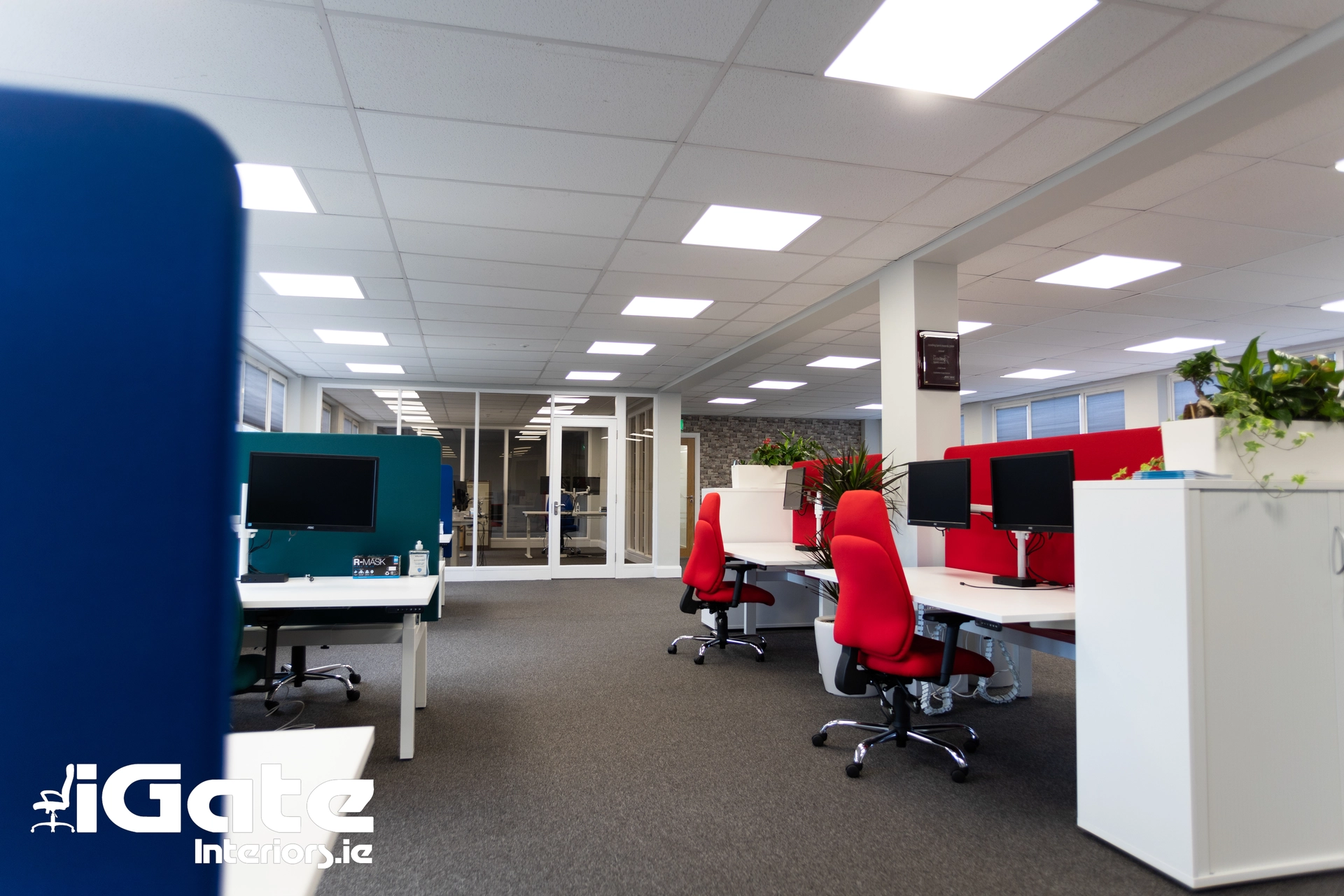
The FBD Mullingar refurbishment combined flexible workstations, integrated storage and varied work settings, demonstrating how thoughtful office design can support a more adaptable approach to hot desking.
What Is Hot Desking and How Does It Work?
Hot desking is a form of desk sharing where employees use workstations on a flexible basis rather than having one allocated permanently. A person may work at one desk on Monday and a different one later in the week.
In a simple setup, staff choose any free desk when they arrive. Larger workplaces may use a booking system so employees can reserve a workstation before travelling to the office. Either approach can work, but the desks are treated as shared resources rather than personal spaces.
That changes how the workplace is organised. Employees cannot necessarily leave equipment or personal items at a desk overnight, so storage needs to be considered elsewhere. Shared workstations also need to suit a range of users.
Hot desking is closely related to wider office space planning. The goal is not simply to fit fewer desks into the building. It is to work out how many workstations are genuinely required and what other spaces employees need around them.
Hot desking vs desk booking
Hot desking does not always require reservations. Smaller offices may simply let staff use an available desk, while larger workplaces may benefit from a booking system when attendance varies or busy areas are likely to fill up.

GoFundMe’s Dublin office was designed around flexible layouts, dedicated workstations and collaborative areas, creating a useful example of how different work settings can sit alongside shared desk space as teams grow
Why Do Companies Use Hot Desking?
The main reason is straightforward: not every employee is in the office at the same time.
Where teams work from home for part of the week, travel regularly or split their time between locations, assigning a desk to every employee can leave large areas unused. Hot desking allows the workplace to be planned around actual occupancy rather than total headcount.
That does not necessarily mean squeezing the workforce into a smaller office. A better use of space may be to reduce permanently allocated desks and create more areas for informal meetings, quiet work, project discussions or collaborative working.
Hot desking can therefore support a more flexible office design, but only if the space released from traditional desk layouts is used deliberately.
What Are the Advantages of Hot Desking?
Better use of office space
The clearest advantage is reducing the number of desks that sit empty for much of the week. If 100 employees rarely attend at the same time, there may be little value in maintaining 100 permanently assigned workstations.
Greater flexibility
Shared desks make it easier for teams to change where they work depending on the people and tasks involved. A project team may sit together for several days without requiring a permanent change to the layout.
More opportunities for interaction
Changing seating patterns can bring employees into contact with colleagues outside their immediate team. It will not automatically improve collaboration, but it can reduce some fixed boundaries created by assigned seating.
More space for different types of work
Fewer fixed workstations can leave more room for settings that a standard desk does not handle particularly well. That might include meeting rooms, quiet areas, project spaces, soft seating or breakout spaces.
This can make the office more useful for employees who move between individual work, calls and collaboration throughout the day.
What Are the Disadvantages of Hot Desking?
Hot desking is not automatically a better way to organise an office. Many complaints about it are reasonable, especially when shared desks are introduced without changing anything else about the workplace.
Finding a suitable desk
Employees should not arrive unsure whether they will have somewhere to work. If busy days regularly exceed available capacity, hot desking quickly becomes a source of frustration.
Loss of personal space and storage
A permanently assigned desk gives people somewhere to keep everyday belongings, paperwork and equipment. When desks are shared, lockers, personal storage or team storage may be needed instead.
Inconsistent workstation comfort
One employee may need a chair, monitor and desk arranged differently from another. Shared workstations should therefore be easy to adjust, with consistent access to power, screens and commonly used equipment.
Noise and lack of privacy
Problems become more noticeable when every call, online meeting and focused task has to happen in the same open area. Providing meeting booths and quieter spaces gives staff somewhere appropriate to move when a standard desk is not the right setting.
Acoustics also matter. Acoustic panels can form part of a wider strategy to reduce reverberation and control background noise.
Difficulty finding colleagues
When everybody can sit anywhere, teams can become harder to locate. Team neighbourhoods or agreed zones can provide flexibility without turning the office into a daily search.
Many hot desking problems are therefore planning problems rather than unavoidable consequences of sharing desks.
How to Make Hot Desking Work
Get the desk-to-employee balance right
Look at normal attendance, peak days, team schedules and expected growth rather than applying a generic ratio. Different departments may have very different attendance patterns.
This is where proper space planning becomes important. The aim is to provide enough workstations without filling valuable floor space with desks that are consistently empty.
Make every workstation easy to adjust
Shared desks need to work for different people throughout the week. Adjustable chairs, sensible monitor positioning and convenient power access make it easier for someone to settle in quickly and work comfortably.
Provide spaces for calls and focused work
A hot desk is only one type of workspace. Someone taking a confidential call, joining an online meeting or concentrating on detailed work may need a different setting.
Office pods, meeting rooms and quiet areas can absorb activities that would otherwise create disruption around shared desks.
Give employees somewhere for personal belongings
If desk drawers and office pedestals are no longer personal, storage cannot simply disappear. Lockers or designated personal storage make the transition easier and keep workstations clear for the next user.
Think about acoustics from the start
A flexible office often contains more movement and conversation than a fixed seating layout. Acoustic treatment, zoning and enclosed spaces can help protect areas used for focused work. It is also useful to understand how soundproof and acoustic panels work before choosing a solution.
Make desk availability simple
A booking system is not essential, but employees should understand how desks are allocated. If people need to arrive early simply to secure a workstation, the system is not providing much flexibility.
Ask employees how they actually work
Some teams need frequent collaboration. Others spend hours on calls or focused tasks. Speaking to employees can reveal practical requirements that attendance figures alone will not show.
Is Hot Desking Right for Every Office?
No. Hot desking is a useful option, not a universal rule.
It tends to work best where attendance genuinely varies and employees can carry out much of their work from standardised workstations. It also needs enough alternative spaces around the desks for meetings, calls, collaboration and concentrated work.
It may be less suitable for employees who rely on specialist equipment, handle large amounts of physical material or need a permanent technical setup. An office where almost everybody attends every day may also gain little from removing assigned desks.
The choice does not need to be all or nothing. Many workplaces can combine hot desks with assigned specialist workstations, project areas, team neighbourhoods and shared facilities.
The right arrangement depends on the organisation, which is why choosing between different office layout options should begin with how people work rather than with a fashionable workplace model.
Designing an Office Where Hot Desking Actually Works
Hot desking works best when it is treated as one part of a wider workplace strategy, not simply as a decision to remove assigned seating.
Employees still need the right environment for the task in front of them. On one day that might be a standard workstation. On another it could be a quiet area, collaborative setting or private booth. The quality and variety of those spaces can matter just as much as the number of desks.
For businesses reviewing how their workplace should support hybrid or flexible attendance, iGate Interiors can help with office design and space planning as well as the wider commercial office fit-out.
The goal is straightforward: create a workplace where people can find the space they need without wasting floor area on spaces they rarely use.
FAQs About Hot Desking
What is the purpose of hot desking?
Hot desking allows employees to share workstations rather than assigning a permanent desk to every person. It can help businesses use office space more efficiently where attendance varies.
Is hot desking good or bad?
It can work well when there are enough desks, suitable storage, comfortable workstations and alternative spaces for calls and meetings. Poor planning can instead create uncertainty, noise and frustration.
What is the difference between hot desking and desk sharing?
Desk sharing is the broader idea of more than one person using the same workstation at different times. Hot desking usually involves employees choosing or booking from a pool of unassigned desks.
Does hot desking save office space?
It can, especially in hybrid workplaces where not everybody attends at once. Desk numbers should still be based on realistic peak attendance.
Do you need booking software for hot desking?
Not always. Smaller offices may manage informally, while larger workplaces can benefit from a booking system that shows where and when desks are available.

At Presidio’s European Headquarters, iGate Interiors installed 4-person Hush meeting pods alongside open-plan workspaces. They show how hot desking can be supported with dedicated spaces for private meetings, calls and focused conversations rather than expecting every activity to happen at a shared desk.