
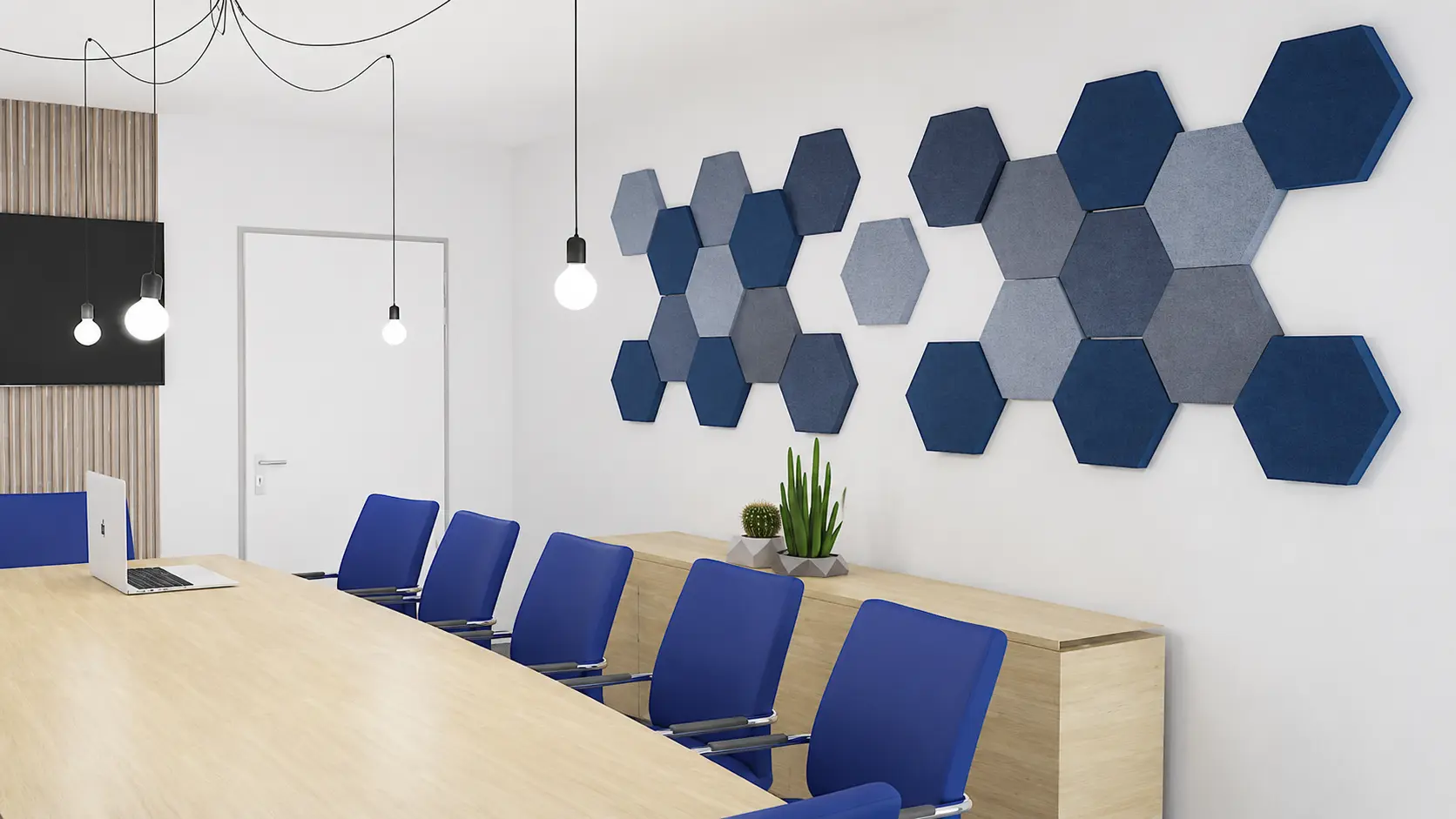
Soundproof panels can make a clear difference in offices, meeting rooms and shared workspaces, but only when they are used for the right purpose. Most soundproof panels are best at absorbing sound inside a room, rather than blocking sound from travelling through walls.
If a meeting room sounds echoey, calls feel harsh, or an open office turns into a wall of chatter by lunchtime, soundproof panels can help. If the issue is music from next door, heavy footfall upstairs, or traffic noise leaking through old windows, panels alone may not be enough.
For workplaces, the real value comes from understanding what kind of noise problem you are dealing with. A well planned office, like those created by iGate Interiors, should consider sound, layout, furniture and finishes together.
Key takeaways
- Soundproof panels work best when the aim is to reduce echo and improve sound quality inside a space.
- They can make speech clearer and help offices feel calmer.
- They do not normally stop sound passing through walls, floors, ceilings or poor doors.
- Material, thickness, position and coverage all matter.
- Office soundproofing works best with good layout, softer finishes and suitable furniture.
- The best results come from looking at the whole workspace.

We installed soundproof panels and acoustic walls in FBD Wicklow’s office to improve sound isolation and increased privacy, as well as creating a natural and structured flow through the office interior.
What are soundproof panels?
Soundproof panels are panels designed to manage sound in a room. In offices, they soften noise, reduce reverberation and make spaces more comfortable for work, meetings and calls.
The phrase can be slightly misleading because many products sold as soundproof panels are technically acoustic panels. They are still useful, and often exactly what a workplace needs.

For BOC Gases’s office modernisation, iGate Interiors fitted the most advanced EzoBord acoustic panelling for maximum acoustic performance, such as this stylish brick-finish wall.
Sound absorption vs sound blocking
Sound absorption and sound blocking are not the same thing.
Sound absorption deals with noise that is already inside the room. It reduces how much sound bounces around from walls, floors, ceilings, glass and furniture. This is where soundproof panels perform well.
Sound blocking is about stopping sound moving from one space to another. That usually needs dense materials, sealed gaps, well built partitions, improved doors, acoustic glazing or specialist construction. A soft panel cannot do all of that by itself.
Put simply, soundproof panels can make a noisy room more pleasant, but they will not usually turn it into a recording studio.
What they are usually made from
Office soundproof panels come in several forms. Fabric wrapped panels are common because they look neat and can match a workplace colour scheme. PET felt panels are popular too, especially where sustainability and design matter.
There are also timber slat panels with acoustic backing, suspended ceiling baffles, hanging rafts, desk screens and freestanding dividers. In design led offices, acoustic products can be part of the overall office interiors service.
Do soundproof panels really work?
Yes, soundproof panels really do work when the problem is echo, reverberation or general noise build up within a room. They can make an office feel less tiring and help people hear each other more clearly.
What they can improve
Soundproof panels are especially useful for controlling reflected sound. When someone speaks in a hard room, their voice travels out, hits surfaces and bounces back. Those reflections overlap, which makes speech less clear and background noise more tiring.
Panels reduce that bounce. This can help with clearer conversations, better video calls, less echo in glass rooms, calmer breakout areas and reduced noise build up in open plan offices.
The change is not always about making a room quiet. Often, the bigger win is making the room easier to use. People do not have to raise their voices as much. Calls sound less hollow.
What they cannot do on their own
Soundproof panels are not a full sound blocking system. They are unlikely to solve noise transfer through thin partitions, gaps under doors, poorly sealed meeting rooms, lightweight ceilings or shared floor voids.
If confidential conversations leak into the next room, wall panels may help the room sound softer, but they may not deal with the leak. The sound could be travelling through the door, ceiling, glazing, ventilation routes or gaps around the frame.
That is where broader office soundproofing comes in. A proper solution may involve acoustic doors, seals, upgraded walls, ceiling treatment or flooring improvements.
Why expectations matter
The best question is not only “do soundproof panels work?” It is “what do I need them to do?”
If the answer is to reduce echo, make speech clearer and make a workplace feel calmer, soundproof panels are usually a smart choice. If the answer is to stop a loud sales team being heard in a boardroom next door, the solution may need more than panels.
This is why acoustic planning should happen early in an office project. For a commercial office fit out, acoustic comfort should sit alongside lighting, layout, storage, furniture and technology.
Where soundproof panels work best in an office
Office spaces now need to support collaboration, focused work, video calls and informal meetings. That means acoustics matter more than they used to. A good office cannot simply look smart. It has to sound right too.
Good acoustic planning can also support productivity. Poor noise control is one of the reasons office environments can become tiring, which is why it often links closely with wider conversations around how office design affects productivity.
Meeting rooms and boardrooms
Meeting rooms are one of the best places to use soundproof panels. Glass walls, large tables and hard floors can create sharp reflections, which makes voices sound harsh, especially on video calls.
Panels on selected walls or ceilings can make speech clearer and reduce the hollow sound that many meeting rooms suffer from. The room feels more professional and easier to use.
Open plan offices
Open plan offices are not meant to be silent, but they should not feel like a café at lunchtime either. Soundproof panels can help reduce the build up of general chatter, keyboard noise and movement through the space.
In an open plan setting, panels are often used alongside ceiling baffles, acoustic screens, storage units and careful desk planning. Focused work areas should not sit directly beside busy collaboration spaces if there is a better option.
Breakout spaces and canteens
Breakout spaces, canteens and tea points can become surprisingly loud. Hard tables, smooth floors and open ceilings all add to the problem. People also naturally speak louder in social areas.
Soundproof panels, ceiling rafts and softer finishes can make these areas more comfortable without making them feel flat or dull. This is useful where the breakout area sits near desks or meeting rooms. It can also be planned as part of better canteen and breakout space design.
Phone booths and quiet zones
Phone booths and quiet zones are designed for privacy and concentration, but they still benefit from acoustic thinking. Panels can improve the sound inside a booth or small room, while the structure itself helps reduce sound transfer.
For teams taking regular calls, meeting booths can remove pressure from the main office and give people somewhere to speak freely.
How to choose and place soundproof panels
The performance of soundproof panels depends on more than the product itself. A well made panel in the wrong place may do very little. A modest panel in the right place can be surprisingly effective.
Room size and surface finishes
The harder the room, the more likely it is to need acoustic treatment. Glass, plasterboard, concrete, exposed ceilings, metal furniture and hard flooring all reflect sound. A small room with 4 hard walls can feel especially uncomfortable because the sound has nowhere to go.
Larger rooms need more careful planning because noise may be coming from several directions. Coverage matters. One small panel behind a plant might look nice, but it will not do much for a large open plan office.
Panel placement matters
Placement should respond to how the room is used. In meeting rooms, panels are often placed on side walls, rear walls or ceilings to reduce speech reflections. In open plan offices, ceiling baffles and screens may be more useful than a single feature wall.
Areas close to noisy activity should be considered first. Think about call areas, collaboration tables, printers, entrances, kitchens and shared walkways. Acoustic treatment can also be built into the design through colour, texture, shape and layout.
This is where early 2D and 3D office design can help, because panels, furniture and circulation can be planned before the space is built or refurbished.
Decorative and practical options
Modern soundproof panels do not need to be boring. Wall panels can be arranged as geometric features. PET felt can add colour. Timber slat acoustic panels can bring warmth. Printed fabric panels can carry subtle branding or artwork.
Ceiling baffles are practical where wall space is limited. Office desk screens help create smaller acoustic zones. Freestanding acoustic dividers can be moved when teams change.
What else helps reduce office noise?
Soundproof panels are useful, but they work best as part of a broader plan. Office noise is rarely caused by one thing. It usually comes from the layout, surfaces, furniture, habits and the type of work happening in the space.
Helpful measures include placing louder teams away from quiet work areas, using soft seating to absorb sound in informal spaces, adding rugs or carpet tiles, choosing upholstered furniture, using storage and planting to break up open areas, creating proper call rooms, checking door seals and reviewing ceiling treatment.
For smaller teams, many of the same principles apply. Choosing the right layout, finishes and work zones can make a modest office much easier to use, especially when looking at office design ideas for small businesses.
Soundproofing is most successful when it feels natural to the workspace. The aim is balance. The room should still feel lively, but not exhausting.
Are soundproof panels worth it?
For many workplaces, soundproof panels are worth it because they solve a problem people feel every day. Poor acoustics can make people tired, distracted and frustrated. It can also make meetings less effective and video calls harder than they need to be.
When they are a good investment
Soundproof panels are a good investment when a room feels echoey, speech is hard to follow, calls sound poor or open plan noise is building throughout the day. They are also useful when a business wants to improve comfort without major construction work.
They can be fitted in stages too. A meeting room might be treated first, followed by call areas, breakout spaces or open plan zones.
For anyone refreshing a workplace, acoustic products can also sit neatly alongside broader commercial office design ideas, rather than feeling like an afterthought.
When you may need a bigger solution
A bigger solution may be needed when the issue is sound travelling between rooms or entering from outside. In that case, the problem is less about absorption and more about soundproofing the structure.
Look at doors, seals, partitions, glazing, ceiling voids, floors and ventilation paths. A proper acoustic review can identify where the sound is actually travelling. The weakest point is often not the wall everyone is blaming.
The honest answer is that soundproof panels really do work, but they work best when used for the right job. For offices, that job is often reducing echo, improving speech clarity and creating better meeting room acoustics.
Final thoughts
Soundproof panels are not a miracle fix, but they are one of the simplest ways to improve the feel of a noisy office. They can reduce echo, soften harsh rooms and make everyday conversations easier.
The key is to match the solution to the problem. If your room is loud because sound is bouncing around inside it, panels can make a noticeable improvement. If the problem is sound passing through a wall, ceiling or door, panels may only be part of the answer.
A quieter workplace is not about removing every sound. It is about creating the right level of acoustic comfort for the people using the space.
If you are reviewing office noise as part of a wider workspace project, it may be worth speaking to the team at iGate Interiors about the best approach for your space.
FAQs
Do soundproof panels block noise from next door?
Not usually on their own. They reduce echo inside your room, but noise from next door often needs acoustic doors, sealed gaps or better partitions.
Are acoustic panels the same as soundproof panels?
Not exactly. Acoustic panels usually absorb sound inside a room. Soundproofing is more about stopping sound from passing between spaces.
Where should soundproof panels be placed?
Place them where sound reflections are causing problems. Common areas include side walls, rear walls, ceilings, meeting rooms and call zones.
Do I need panels on every wall?
Usually not. The best approach is targeted placement based on how the space is used.
Are soundproof panels worth it for a small office?
Yes, especially if the room has hard surfaces or is used for calls and meetings. A small number of well placed panels can help.

Soundproof free-standing wall panels were included in GoFundMe’s office interior, perfect for sound proofing breakout areas from workstations in a small office where space is limited.